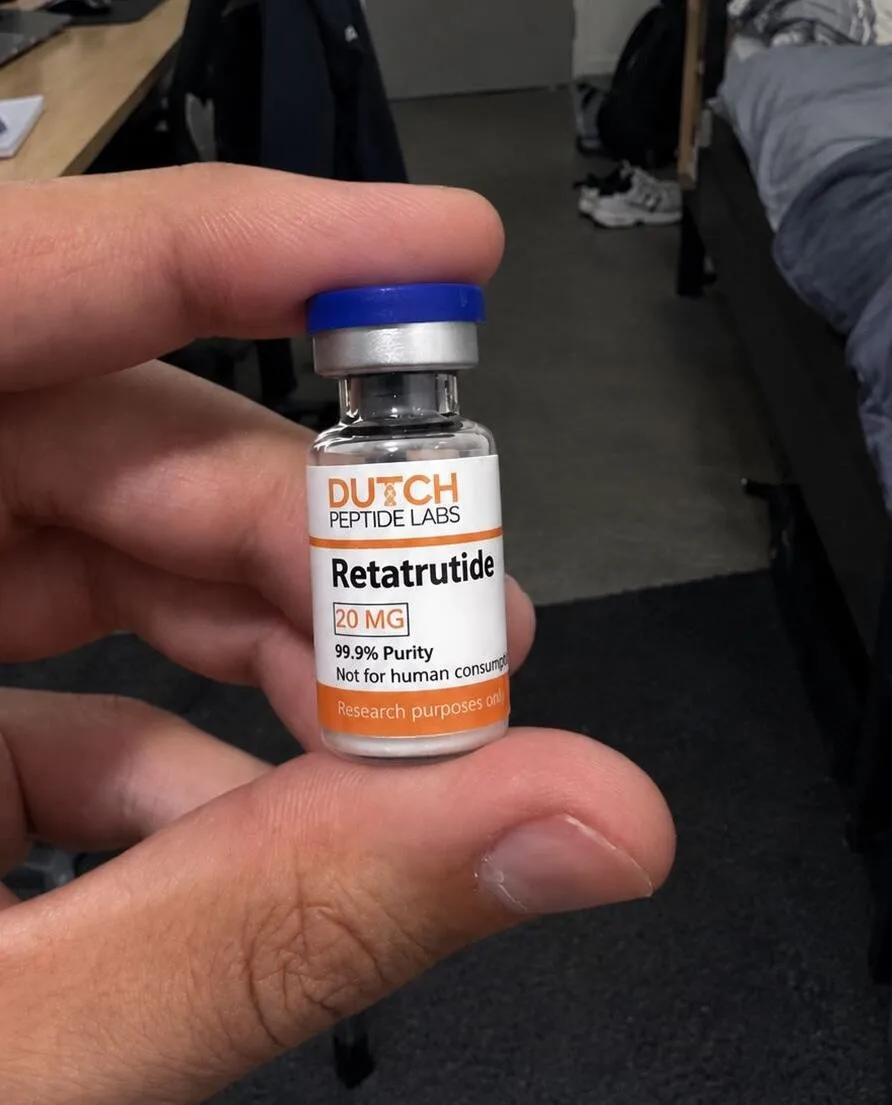





When a research peptide has come through preparative HPLC purification and counterion exchange, a crucial question remains: is the reported purity percentage actually correct? RP-HPLC is the industry standard, but no separation technique is infallible. Capillary electrophoresis (CE) offers an orthogonal check that can make the blind spots of chromatography visible — and deserves a fixed place in the analytical toolkit of any research laboratory working with synthetic peptides.
Why one analytical method is not enough
RP-HPLC separates molecules on the basis of hydrophobicity: the more strongly a peptide binds to the stationary phase, the later it elutes. That works excellently, but has a structural limitation. Two peptide variants with an almost identical hydrophobic character — a deamidation product, say, or a peptide with one wrongly coupled amino acid from an earlier synthesis step — can co-elute and so disappear into the same chromatographic peak. The reported purity figure then looks higher than the actual composition of the sample.
In analytical chemistry this problem is known as the risk of a non-orthogonal method: if the second check separates on the same physical principle as the first, the same impurities are overlooked. Orthogonality means a second technique separates on a fundamentally different principle, so that impurities the first method misses still come to light.
How capillary electrophoresis separates on charge, not hydrophobicity
CE separates molecules on the basis of their electrophoretic mobility in an electric field within a thin, buffer-filled silica capillary. That mobility depends on the charge-to-mass ratio of the peptide, not on hydrophobicity. A deamidation converting an amide side chain into a carboxylic acid changes retention in RP-HPLC hardly at all, but shifts the net charge of the peptide measurably — and with it the migration time in CE.
Because the separation mechanism is so different from chromatography, capillary zone electrophoresis (CZE) functions as a classic orthogonal technique alongside RP-HPLC. Where chromatography asks “how fatty or hydrophobic is this molecule”, CE asks “how much charge does this molecule carry and how fast does it migrate”. Impurities that happen to match the main product in both dimensions are rare, which makes the combination of both methods particularly powerful.
What an orthogonal CE run can expose in practice
In published analytical research, capillary electrophoresis has repeatedly been used to detect impurities that RP-HPLC alone did not pick up, precisely in peptides that already showed a high HPLC purity figure after preparative purification. Typical cases are:
- Deletion sequences with a hydrophobicity comparable to the complete peptide, but a deviating charge because of the missing residue.
- Racemisation products that barely separate from the desired stereoisomer in RP-HPLC.
- Residual traces of counterions or counterion-exchange products after the fraction pooling step, which subtly affect the net charge of the sample.
That makes CE not a replacement for RP-HPLC, but an additional check covering specifically the weak points of chromatography — particularly relevant just after a preparative purification step, when a batch receives its definitive documentation.
Practical requirements for CE analysis of peptides
CE analysis of peptides calls for a number of specific choices. Buffer composition and pH largely determine the net charge and therefore the separation: at a pH far from the isoelectric point of the peptide the charge is greatest and with it the resolution is often best. Fused-silica capillaries with a small internal volume limit band broadening, and UV detection at 200–220 nm (where the peptide bond absorbs) is the usual readout method. For identity confirmation alongside purity, CE can also be coupled to mass spectrometry (CE-MS), combining separation and mass determination in one workflow.
Because migration times in CE are more sensitive to small variations in buffer, temperature and capillary condition than retention times in HPLC, method validation with suitable reference standards is essential before CE data is included alongside HPLC data in an analytical report.
Orthogonality as part of a thorough analytical workflow
For a research group synthesising and purifying its own batches, adding an orthogonal technique such as CE is a logical next step after the purification chain of cleavage, preparative HPLC and fraction pooling. The figure on a certificate of analysis is never stronger than the method by which it was determined; combining two fundamentally different separation principles produces a far more robust picture of the actual composition of a research sample.
Disclaimer: the products and information on this website are intended solely for laboratory and research purposes. They are not intended for human or animal consumption, diagnostic use or therapeutic application.