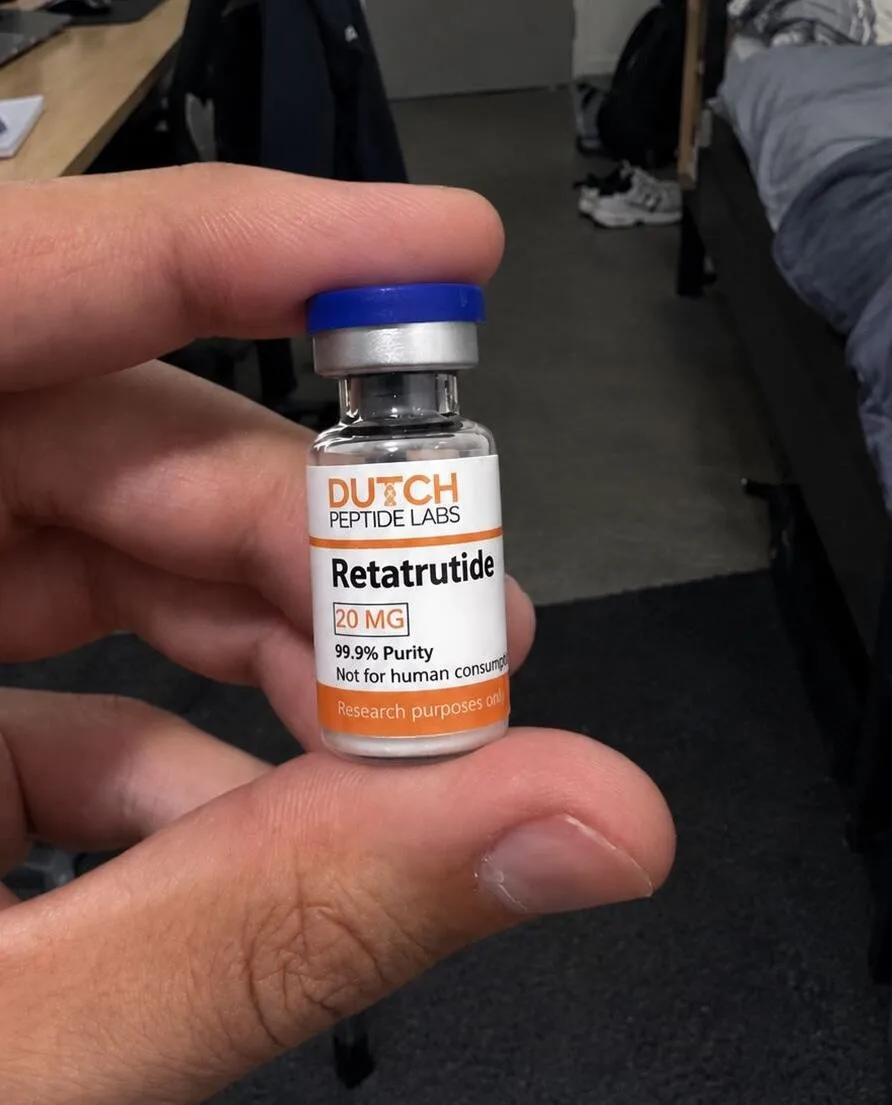






GLP-1 receptor agonists are among the most researched peptide classes of recent years. What began as research into glucose regulation has since spread into cardiovascular physiology, neurobiology and oncology. For laboratories working with these research substances it is useful to have the main lines of research set out. This overview summarises the core findings from the preclinical literature, with attention to the models and methods underlying them.
Receptor mechanism: how GLP-1 analogues act
The GLP-1 receptor is a G-protein-coupled receptor signalling predominantly via the Gs protein/cAMP route, with a secondary role for β-arrestin-mediated signalling and receptor internalisation. Structural research with cryo-EM has shown that different agonists stabilise diverging active conformations of transmembrane domains 5 through 7. This distinction is relevant because it forms the basis for so-called “biased agonism”: molecules that activate Gs signalling more selectively relative to β-arrestin recruitment. Researchers use this kind of structural data to explain why chemically related analogues show diverging effects in cell culture and animal studies.
Metabolic models: glucose regulation and body weight
The greater part of the preclinical literature concerns metabolic endpoints in rodent and primate models. Studies consistently report a lowering of plasma glucose values and a decrease in body weight following administration of GLP-1 receptor agonists, linked to effects on gastric emptying and satiety signals in the hypothalamus. Newer research molecules, including selective small-molecule agonists, are compared with established peptide analogues in this type of model to characterise receptor selectivity and pharmacokinetic profile.
Neurobiological research: addiction and neurodegeneration
A growing subfield investigates the role of GLP-1 signalling in the central nervous system. In animal models of psychostimulant use, agonists such as exendin-4 and liraglutide dampen the hyperlocomotion and conditioned place preference induced by cocaine or amphetamine, without affecting basal motor activity or the valuation of natural rewards. This points to a modulating effect on mesolimbic dopamine signalling. In models of Alzheimer’s disease, behavioural tests show improvements in learning and memory tasks, while histopathological examination reports a decrease in amyloid-β deposition and phosphorylated tau. These findings are interpreted cautiously, because translation from rodent model to human is notoriously difficult within the neurodegeneration literature.
Cardiovascular and beta-cell research
Preclinical work with GLP-1, exenatide and liraglutide points to favourable effects on endothelial function, sodium excretion, recovery after ischaemic damage and myocardial function in animal models. In parallel, a second line of research investigates the role of GLP-1 receptor activation in beta-cell survival: several studies report inhibition of apoptosis and preservation of beta-cell mass in models of diabetes. Both lines of research lean heavily on systematic reviews and meta-analyses of animal studies to make sense of variation between individual experiments.
Methodological caveats
Anyone assessing this literature does well to weigh a number of methodological factors:
- The choice of model (rodent versus primate) considerably affects how translatable dose-response data are.
- Route of administration and formulation vary widely between studies, which complicates comparison.
- Publication bias plays a part in areas with a great deal of exploratory research, such as the oncology applications of GLP-1 agonists.
- Receptor expression patterns differ between species, which complicates the interpretation of central effects.
For researchers setting up peptide-related experiments themselves, a critical reading of the source data and the statistical methods used remains essential before results are generalised.
In closing
The preclinical literature around GLP-1 receptor agonists is broad and still growing, with metabolic applications as the starting point and increasing attention to cardiovascular and neurobiological mechanisms. For laboratories it is valuable to keep following lines of research at receptor level, since new structural insights feed directly into the interpretation of functional animal models.
This information is intended solely for laboratory and research purposes. The products and information on this website are not intended for human or animal consumption, diagnostic use or therapeutic application.