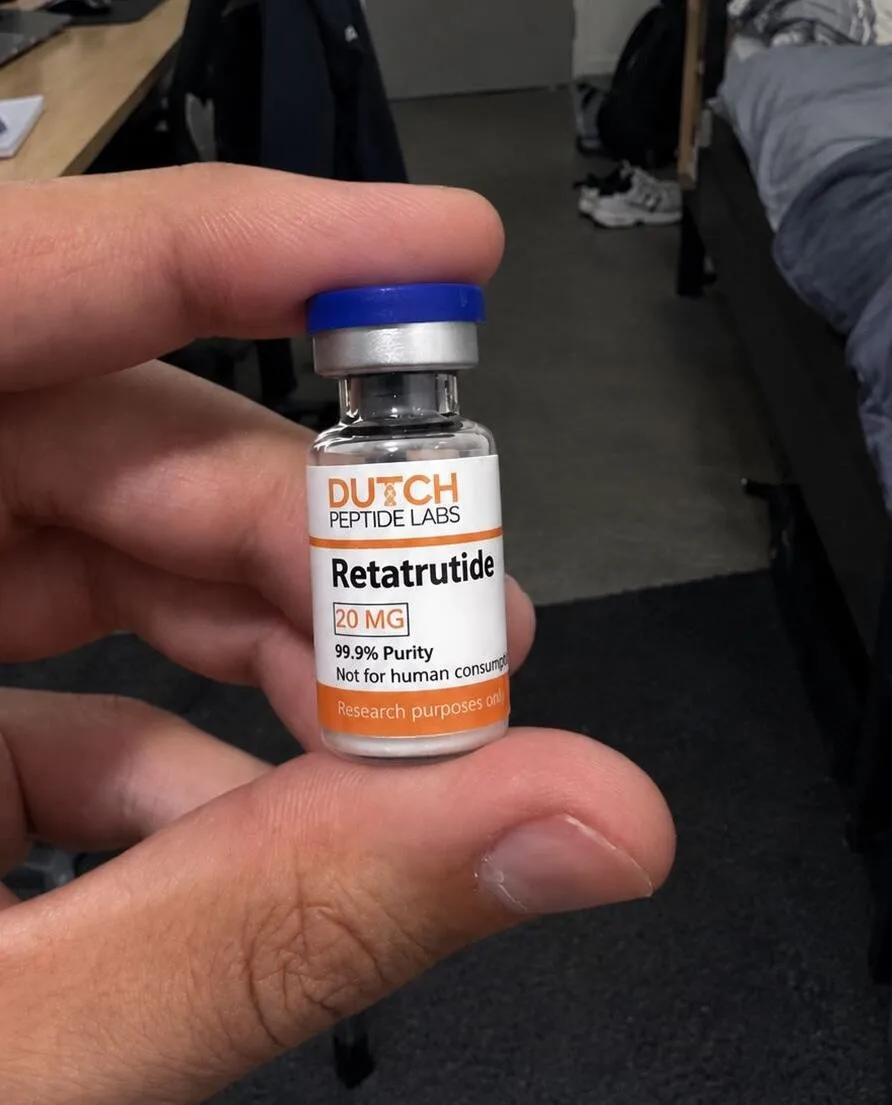





Why pH is an underestimated variable
In work with research peptides, much attention goes to purity, molecular weight and the right diluent. A variable at least as decisive for the quality of a sample often receives less: the pH of the solution. Acidity influences not only how well a peptide dissolves, but also how quickly it degrades during storage and use in the laboratory. This article discusses the underlying chemistry and the practical considerations that play a part in research practice.
The isoelectric point: the key to solubility
Every peptide has an isoelectric point (pI): the pH value at which the net charge of the molecule is zero. At this pH the positive and negative charge groups — from acidic and basic side chains such as aspartate, glutamate, lysine and arginine — cancel each other out. Without a net charge there is less electrostatic repulsion between peptide molecules, so they aggregate and precipitate out of solution more readily.
This explains why a peptide that dissolves perfectly well at pH 7 suddenly flocculates as soon as the solution shifts towards its pI, for example through dilution with another medium or through CO2 uptake from the air slowly lowering the pH of an unbuffered solution. For researchers, calculating or looking up the pI of a sequence is therefore a useful first step before a dissolution protocol is fixed.
pH and degradation kinetics
Besides solubility, pH also governs the rate of chemical degradation routes. Two common degradation mechanisms in peptides are strongly pH-dependent:
- Deamidation of asparagine and glutamine residues proceeds via a cyclic succinimide intermediate and generally accelerates at neutral to slightly basic pH (around pH 7-8), while the reaction runs more slowly under mild acidity.
- Aspartate isomerisation follows a comparable mechanism and can alter the three-dimensional structure of a peptide subtly but measurably, which shows up in analytical data as extra peaks beside the main peak in an HPLC chromatogram.
At the other end of the scale, hydrolysis of certain peptide bonds accelerates under strongly acidic or strongly basic conditions. There is therefore no universally “safe” pH for all sequences; the optimum differs per peptide and depends on the amino acids present.
Buffers in research practice
To keep the pH of a solution stable during experimental use, the literature often uses buffer systems rather than unbuffered water. Buffers commonly used in peptide research include acetate buffer (around pH 4-5), phosphate buffer (around pH 6.5-7.5) and Tris buffer (around pH 7.5-8.5). The choice depends on the pI of the peptide, the solubility required and any interaction with other reagents in the experiment.
One caveat that often comes up in analytical work: some buffer components can themselves interfere with downstream analytical techniques such as mass spectrometry. Phosphate buffers, for example, are notoriously problematic for MS detection because of ion suppression, which is why researchers sometimes deliberately choose volatile alternatives such as ammonium acetate when a sample has to be analysed later by MS.
Practical considerations in protocol design
For anyone drawing up a dissolution or storage protocol for research purposes, a few controllable points are relevant:
- Determine or look up the pI of the specific sequence beforehand, so that a pH close to this point can be avoided.
- Measure the pH of the buffers used with calibrated equipment rather than relying on the nominal value on the label.
- Allow for possible interference from buffer components in subsequent analyses such as MS or cell culture experiments.
- Document which buffer and pH were used for each sample, so that results remain traceable and reproducible later.
Published analytical studies show that a carefully chosen pH can make the difference between a sample that stays stable for weeks and one that shows measurable degradation within days. This underlines that pH management is not a side issue, but an integral part of good laboratory practice when working with peptides.
This information is intended solely for laboratory and research purposes. The products and information of Dutch Peptide Labs are not intended for human or animal consumption, diagnostic use or therapeutic application.