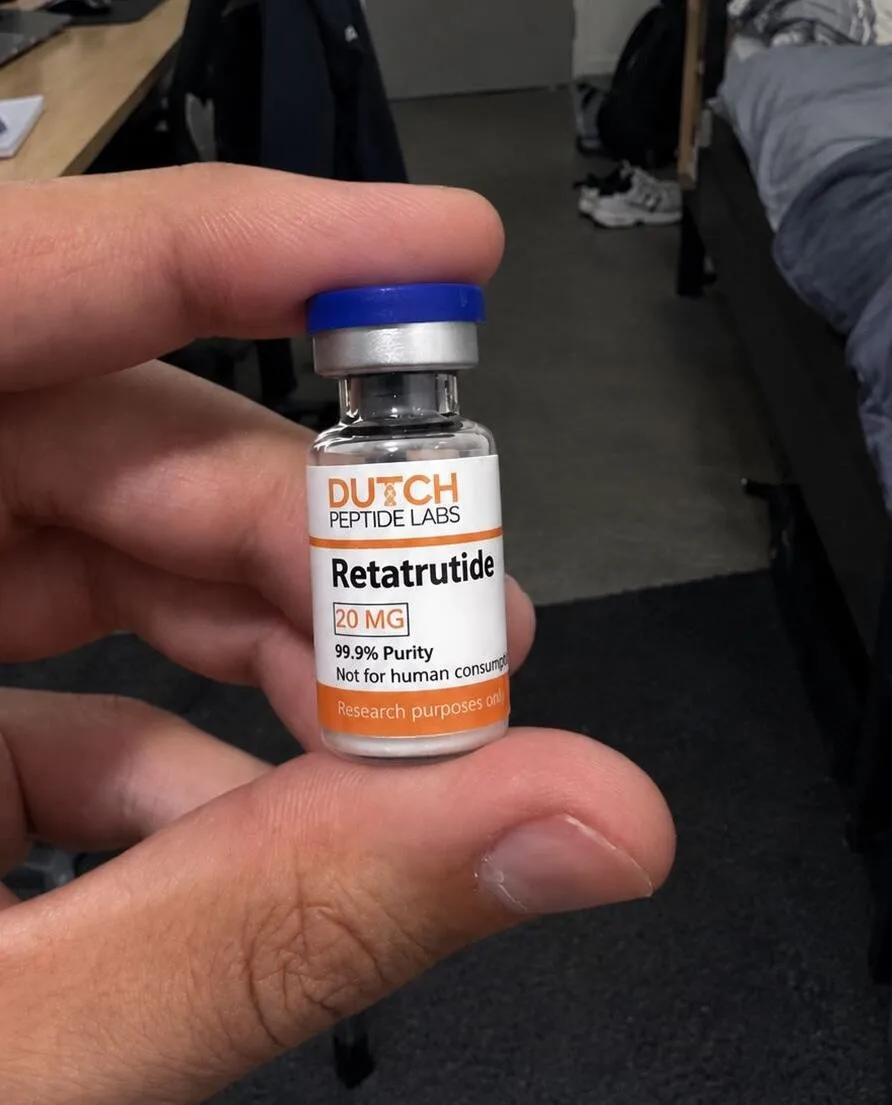





Almost every certificate of analysis (CoA) for a research peptide carries a purity percentage: 98%, 99%, sometimes higher. That number is often read as a simple quality label — the higher the better. But how that percentage comes about, and what it does and does not cover, is less clear-cut than most labels suggest. For anyone buying peptides for laboratory research it is useful to know exactly what lies behind that figure.
How is the percentage determined?
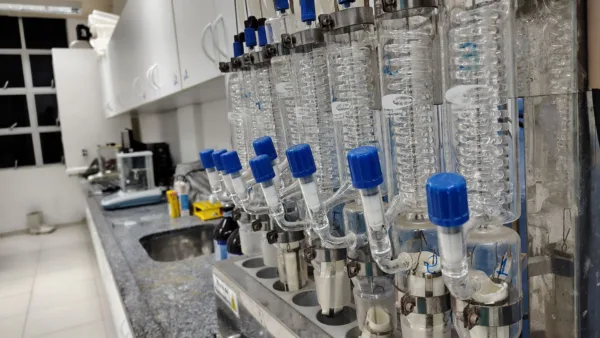
The purity stated on a CoA almost always comes from HPLC analysis (high-performance liquid chromatography), usually with UV detection. The sample is passed over a column and the various components separate on the basis of their interaction with the column material. Each component produces a peak in the chromatogram, and purity is calculated as the area of the main peak divided by the total peak area — the so-called area% method.
That is a relative measure: it says something about the ratio between the target compound and other UV-active components in the sample, not about the absolute quantity of peptide present. Two samples with an identical “98% pure” on the label can therefore still differ in what is actually in the vial, depending on the wavelength, column and gradient used.
What the figure does not measure
An HPLC purity percentage says something about impurities arising during synthesis, such as truncated sequences, deletion or addition variants and oxidation products. It says nothing, however, about components that are not or barely UV-active and therefore do not appear as a separate peak. Think of residual moisture, remaining acetate or trifluoroacetic acid (TFA) from the purification step, and counterions that stay bound to the peptide.
This non-peptide mass can be considerable. A lyophilisate that is 98% “pure” peptide by HPLC can still consist, by total mass, of a substantial proportion of salt, counterions and moisture. That distinction is captured by the term net peptide content, a separate measurement — often via amino acid analysis or nitrogen determination — indicating what part of the total weight is actually peptide.
HPLC purity versus net content
This distinction becomes relevant as soon as someone wants to calculate a molar quantity from the delivered weight. If a CoA states only HPLC purity and no net peptide content, the assumption that “10 mg of powder = 10 mg of peptide” is in practice often incorrect. For quantitative applications in research — setting up a dilution series at a particular molarity, for example — that difference matters, and it is worth asking a supplier whether the net content has been determined separately.
Why method and equipment matter
Purity figures are also sensitive to the analytical method used. A different column, a different UV wavelength or a different gradient profile can separate impurities differently and so give a slightly different percentage, even for the same sample. Some CoAs therefore state the method explicitly (column type, wavelength, mobile phase), which makes it possible to assess the measurement rather than merely read the final figure. The absence of those method details is not in itself evidence of a problem, but it does make a claim harder to verify.
What to look for when assessing a CoA
- Is the analytical method (column, wavelength, gradient) stated, or only a percentage?
- Besides HPLC purity, is a net peptide content or amino acid analysis included?
- Is there mass spectrometric confirmation of the molecular mass, separate from the purity measurement?
- Is the batch or lot number traceable to the specific sample delivered?
- Is there information about residual moisture and counterions (TFA or acetate content, for example)?
A high percentage without these underlying data is not necessarily unreliable, but it offers less to go on for anyone wanting to substantiate results in a research design.
In conclusion
A purity percentage on a label is a useful but limited piece of information. It says something about the relative absence of synthesis-related by-products according to one specific analytical method, but nothing about net peptide content, counterions or residual moisture — factors that can be just as relevant for quantitative research. Anyone needing precision does well to consult the full CoA rather than only the percentage on the packaging.
This information is intended solely for laboratory and research purposes. The products of Dutch Peptide Labs are not intended for human or animal consumption, diagnostic use or therapeutic application.