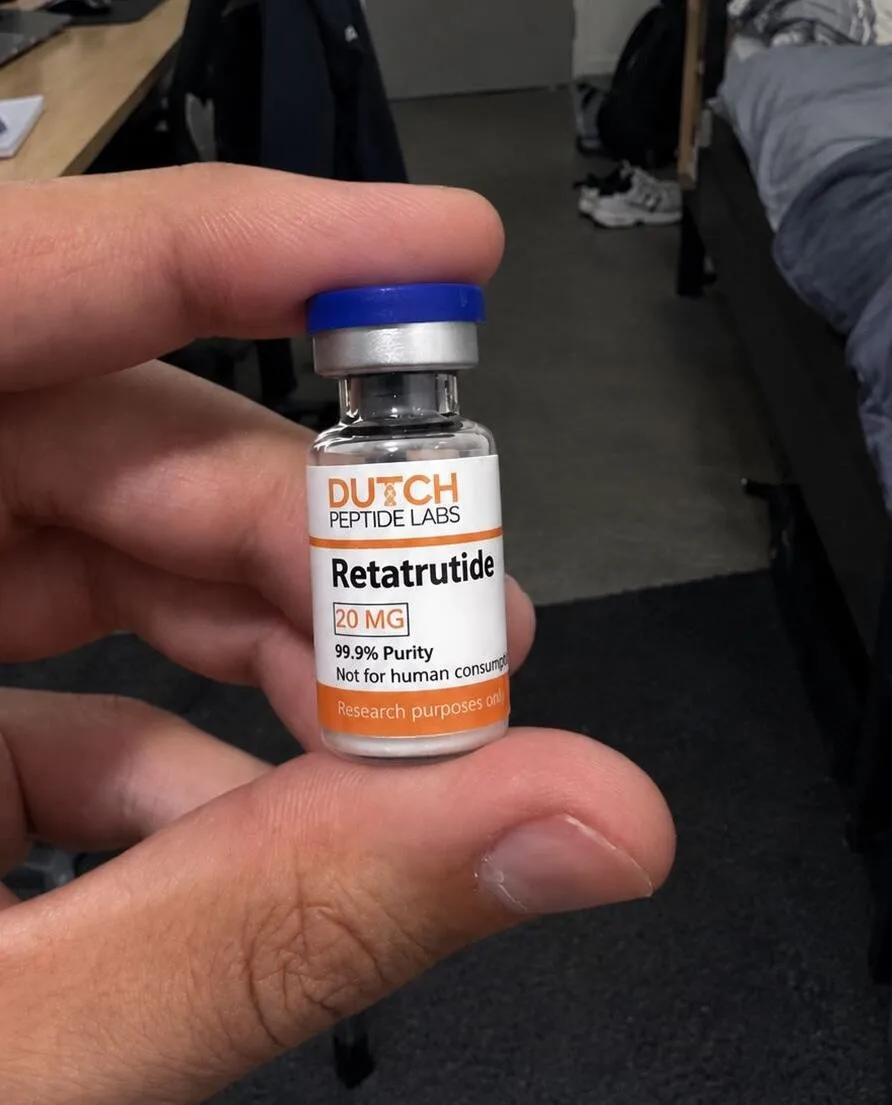





Anyone working with lyophilised peptides in a laboratory sooner or later faces the same choice: which solvent do you use to reconstitute the powder? The two most widely used options are bacteriostatic water and sterile water. Both look identical and are often mentioned interchangeably, but their composition and intended use differ materially. For researchers reconstituting peptides for analytical or experimental purposes, that difference is relevant to the reliability of results and the shelf life of a solution.
What is sterile water?
Sterile water (often designated “water for injection” or WFI grade) is distilled or deionised water that has been sterilised, usually by autoclaving or filtration, and is free of pyrogens and micro-organisms. It contains no added substances: no preservative, no buffer, no salt. That purity is precisely why it is used in analytical applications where any extra compound can be a confounding factor, for instance in mass spectrometry or when preparing reference solutions.
The flip side of that purity is the limited shelf life after opening. Once an ampoule or vial of sterile water has been pierced, there is no longer any mechanism holding microbial growth back. In practice this means an opened stock has to be used or discarded within a relatively short time, and that repeated piercing of the same vial increases the risk of contamination.
What is bacteriostatic water?
Bacteriostatic water is essentially the same deionised and sterilised water, with one added component: usually 0.9% benzyl alcohol as a preservative. Benzyl alcohol inhibits the growth of most bacteria and fungi, so a vial stays usable longer after opening, provided it is pierced correctly and under aseptic conditions each time.
That property makes bacteriostatic water practical for applications where the same vial is used several times to draw small quantities, such as reconstituting several research samples from one stock vial. It is not, however, a synonym for “keeps indefinitely” — preservation slows microbial growth, it does not prevent it entirely, and the efficacy of the preservative declines over time.
Why the choice matters in the laboratory
The preservative benzyl alcohol is not inert. In cell culture research it can be cytotoxic, even at concentrations that can occur in reconstituted solutions. For experiments with cell culture systems or sensitive biological assays, sterile water without additives is therefore often the appropriate choice, despite the shorter shelf life after opening.
For applications where chemical purity is central, such as preparing samples for HPLC or MS analysis, every extra component in the solvent is a potential source of noise in the chromatogram or spectrum. Here too, sterile water without additives is usually the standard choice. Bacteriostatic water lends itself better to situations where repeated use of the same vial is practical and the presence of benzyl alcohol is not a confounding factor for the research purpose at hand.
Practical considerations in use
- Aseptic technique is still needed. A preservative is no substitute for sterile working; needles and septa should be disinfected at every use.
- Document shelf life after opening. Note the opening date on the vial and keep track of how long an opened stock has been in use, whichever type of water is used.
- Respect storage conditions. Both types of water should be kept chilled and dark after opening, in line with the recommendations on the supplier’s certificate of analysis.
- Consistency within a series of experiments. Do not switch solvent halfway through a series of measurements; that introduces an unnecessary variable into the results.
In closing
The difference between bacteriostatic and sterile water looks small at first sight, but has direct consequences for the reproducibility of laboratory results and the shelf life of reconstituted stocks. The choice depends on the specific research purpose: analytical purity argues for sterile water, practical reuse of a vial argues for bacteriostatic water. A deliberate choice, based on the protocol and the sensitivity of the experiment, is part of careful laboratory practice.
This information and the products of Dutch Peptide Labs are intended solely for laboratory and research purposes. Not for human or animal consumption, diagnostic use or therapeutic application.