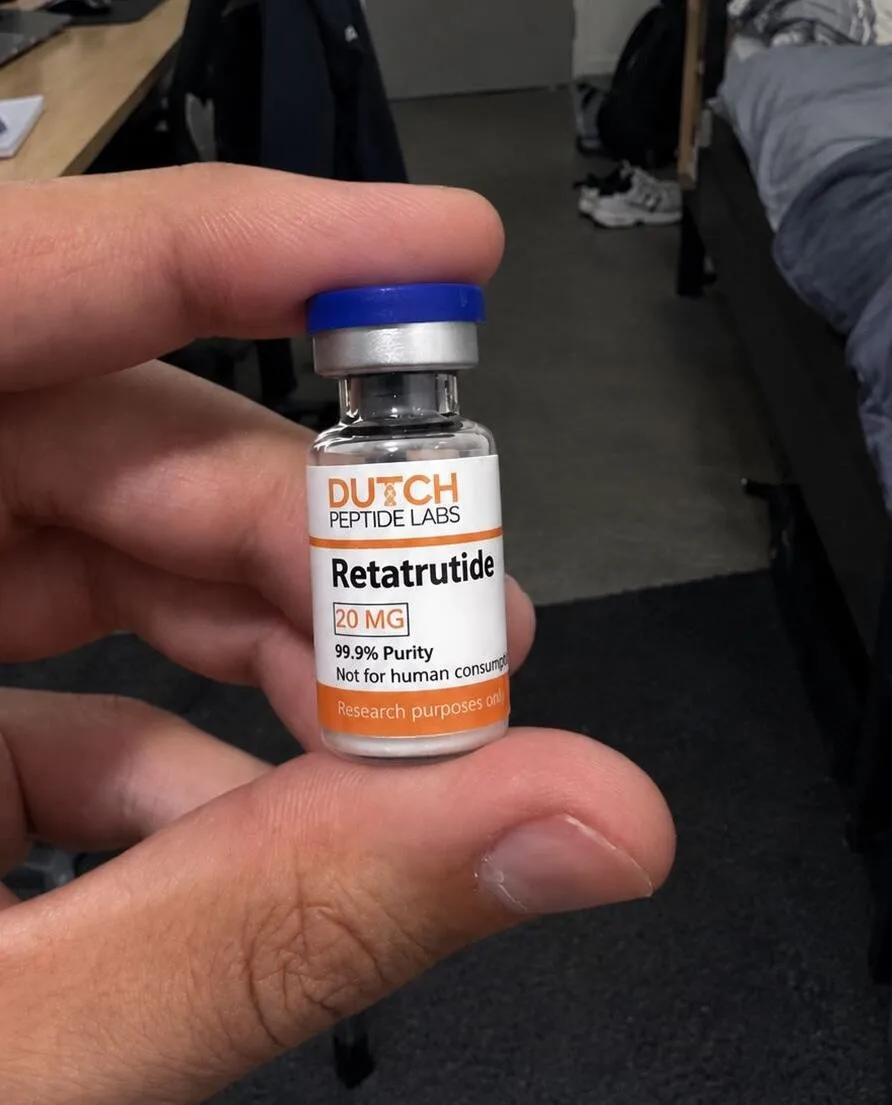






A Certificate of Analysis (CoA) is often seen as the proof that a peptide is what the supplier claims. But not every CoA actually belongs to the vial standing on your bench. More and more laboratories and researchers therefore look not only at the figures on the certificate, but also at whether that certificate is linked to the specific lot (batch) they are holding. That distinction between a batch-specific CoA and a generic product certificate is less obvious than it seems, and has direct consequences for the reliability of research data.
What a lot number actually tells you
A lot number (lot or batch number) identifies one specific production run: a given quantity of material, synthesised and purified under the same conditions, at the same time. Within that single lot the composition is relatively homogeneous. Between different lots of the same peptide, however, small but measurable differences can arise: in purity percentage, in residual solvents, in the exact composition of by-products. That is not an exception but a normal consequence of chemical synthesis at laboratory scale. The lot number is therefore not merely an administrative detail; it is the key linking an analytical result to a physical object.
Generic certificate versus batch-specific CoA
A generic or “representative” CoA describes the typical specifications of a product in general, often based on an earlier or average measurement. Such a document looks professional and usually does contain a purity percentage and a molecular mass, but it says little about the specific vial being shipped. A batch-specific CoA, by contrast, is the result of an analysis carried out on material from exactly that production run, with a lot number that can be found on the label of the packaging. The difference often becomes visible only when you set two documents side by side: a generic certificate repeats itself word for word across several orders, while a batch-specific certificate shows small, plausible variations between deliveries.
How to check whether a CoA really belongs to your delivery
- Compare the lot number on the packaging label with the lot number on the certificate; they must match exactly.
- Check that the analysis date follows logically from the production and dispatch date of the lot in question.
- See whether the reported values (retention time, peak shape, mass) are plausible, non-round numbers, rather than identical figures recurring across different orders.
- Ask, where available, for the underlying chromatogram or mass spectrum rather than only the summary table.
These steps take little time, but give a good picture of whether a supplier genuinely tests per lot, or tests once and then repeats that result on every label.
Signals that call for extra attention
A few patterns are reason to look more critically at a supplier’s documentation. A certificate without any lot number, or with a number that does not match the label, is a clear signal. The same goes for certificates that are word-for-word identical across several independent orders, including exactly the same retention times down to the hundredth of a second. A missing test method or instrument name (which type of HPLC column and which detector were used, for example) also makes a certificate harder to verify. None of these signals is decisive on its own, but together they indicate the extent to which documentation is genuinely linked to the physical material.
Why this counts for reproducibility
In a research context, reproducibility is directly connected to the traceability of material. If a result later proves impossible to repeat, one of the first questions is whether the material used has changed in the meantime, or whether a different lot was used without that being recorded. A batch-specific CoA, archived alongside the lot number in a laboratory’s own documentation, makes it possible to answer that question afterwards. Without that link, distinguishing between a variation in the material and a variation in experimental execution becomes all but impossible.
Consulting a certificate is therefore more than reading off a purity percentage. It is a question of whether that percentage genuinely belongs to the material being used, and whether that link has been recorded verifiably and reproducibly.
This information and the products of Dutch Peptide Labs are intended solely for laboratory and research purposes. Not intended for human or animal consumption, diagnostic use or therapeutic application.