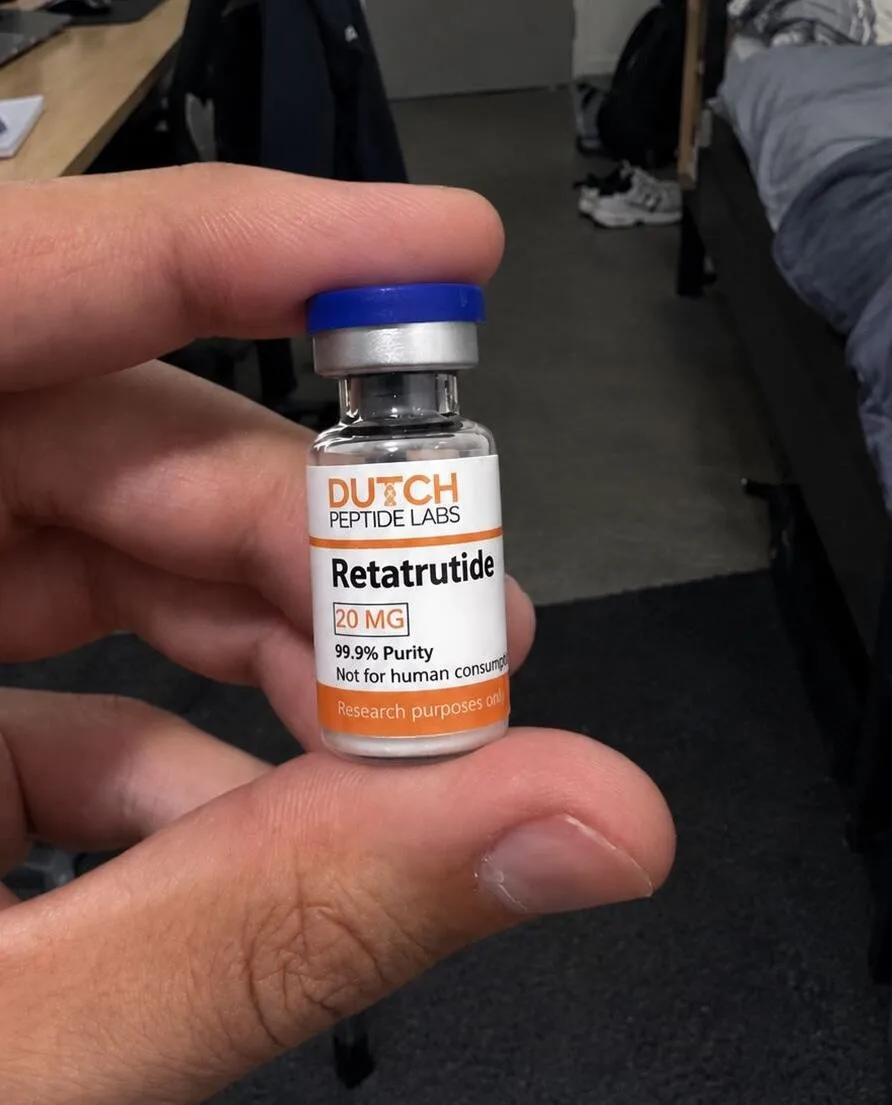





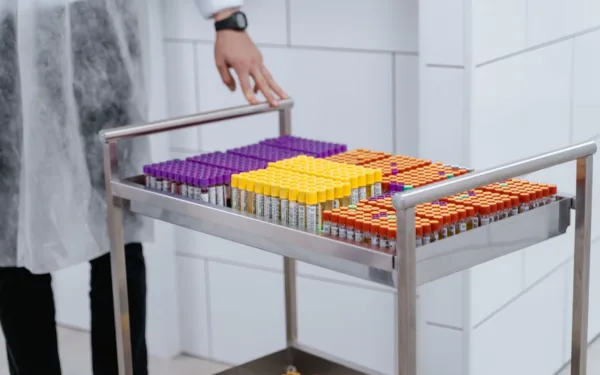
A peptide that leaves the laboratory perfectly synthesised and purified can still arrive on the bench degraded if storage and transport are not right. For researchers working with peptides, stability is no side issue: it determines whether the results of an experiment still say anything about the original molecule. This article sets out the main factors influencing the shelf life of research peptides, from the moment of dispatch to the moment of use in the laboratory’s storage cabinet.
Why the cold chain begins at dispatch
Peptides are sensitive to temperature fluctuations as soon as they leave a supplier’s freezer system. During transport the aim is usually a temperature range of approximately 2-8°C, achieved with pre-cooled cooling elements that, through the melting process of the coolant, give a gradual, stable cooling rather than a shock. Insulated packaging, a closed environment and minimal time between dispatch and receipt limit exposure to heat during transport.
More important than the shipping itself is what happens after arrival. A consignment left on a counter for hours before someone takes it to the freezer undermines the whole process that preceded it. A good protocol therefore provides for immediate handling: recognise the consignment, check it and transfer it as quickly as possible to permanent storage at the right temperature.
Lyophilisate versus reconstituted solution
Storage in powder form
Freeze-dried (lyophilised) peptide in powder form is considerably more stable than a solution, because the absence of water slows many degradation routes. At -20°C lyophilised material usually remains structurally intact for several years; at -80°C that period can extend further still. For peptides containing sensitive amino acid residues — methionine, cysteine or tryptophan, for example — this stricter storage is extra relevant, because oxidation of these residues is one of the most common degradation mechanisms.
After reconstitution: aliquoting and freeze-thaw
As soon as a peptide is dissolved, the stability dynamics change completely. An aqueous solution is more vulnerable to hydrolysis, deamidation and aggregation than a dry powder, and the shelf life falls from years to days or weeks, depending on the peptide and the storage temperature. One of the most underestimated causes of quality loss is repeated freezing and thawing of the same vial: every cycle introduces mechanical and chemical stress that can damage the structure of the peptide. The practical solution is aliquoting immediately after reconstitution — dividing the solution into smaller, single-use portions so that each sample undergoes at most one thaw cycle.
Moisture, light and oxygen: the quiet threats
Besides temperature, three other factors play a large part in the stability of peptides, both in powder form and in solution:
- Moisture: lyophilised material too can take up moisture from the air, which sets hydrolysis and aggregation in motion. A well-sealed vial, supplemented where appropriate with a desiccant during storage or shipping, limits this uptake considerably.
- Light: UV and visible light can damage certain peptide bonds and aromatic residues. Storage in a dark environment — a closed freezer drawer or an amber vial — is a simple measure with a large impact.
- Oxygen: exposure to air accelerates oxidative degradation, especially in peptides with sulphur-containing or aromatic residues. Keeping vials closed as much as possible and limiting the number of times a vial is opened helps minimise this.
A practical storage protocol for the laboratory
A robust protocol combines these insights into a number of concrete steps:
- Check consignments immediately on receipt and transfer them to the definitive storage temperature within a few hours.
- Store lyophilised material preferably at -20°C, and at -80°C for longer research periods or particularly sensitive peptides.
- Carry out reconstitution only shortly before use, and divide the solution into single-use aliquots immediately afterwards.
- Keep vials dark, dry and closed as much as possible, and record or limit the number of open-close cycles.
- Keep a log of receipt, reconstitution and use dates per batch, so that degradation patterns remain traceable within a research project.
Peptides stored stably yield more consistent and more interpretable research results. By treating transport, storage and reconstitution as one continuous chain — rather than as separate steps — the quality of the starting material is better safeguarded throughout the research process.
Disclaimer: the products and information of Dutch Peptide Labs are intended solely for laboratory and research purposes. They are not intended for human or animal consumption, diagnostic use or therapeutic application.