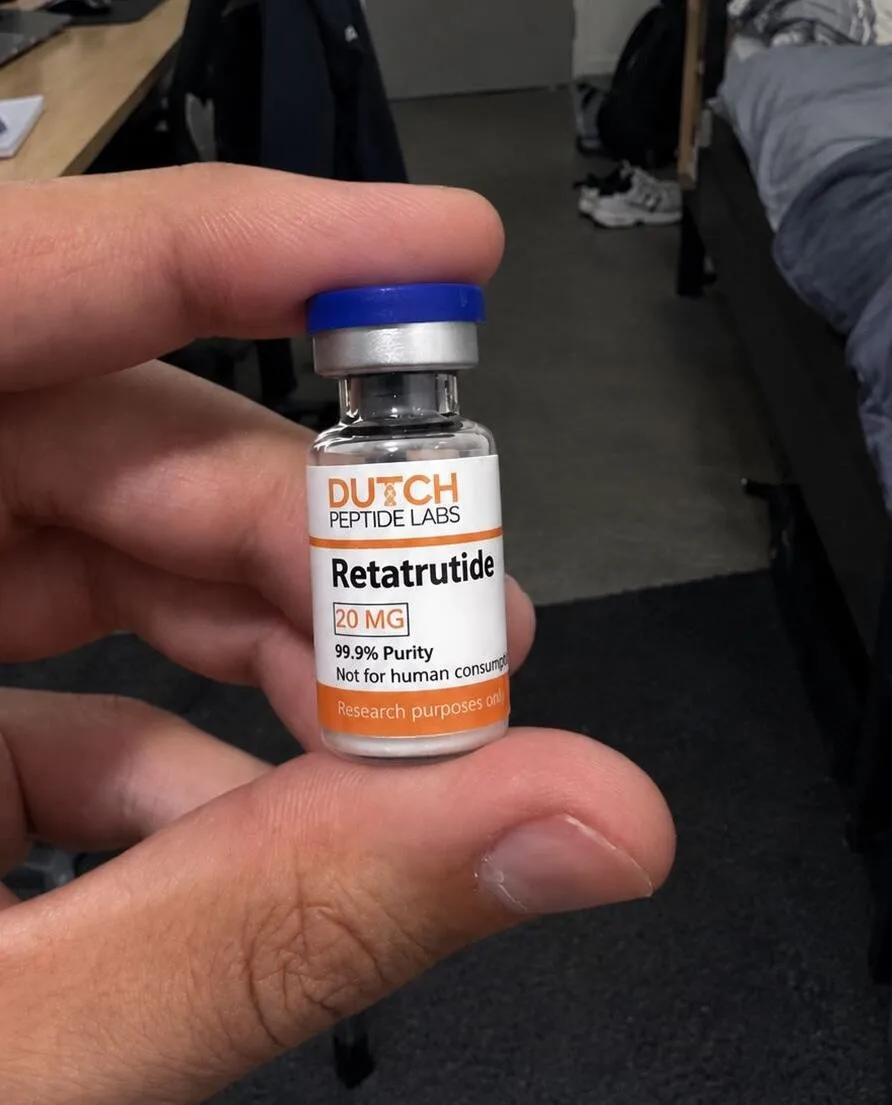





A certificate of analysis (CoA) is by now standard practice when buying research peptides, but a CoA drawn up by the supplier itself does not tell the whole story. More and more laboratories and buyers therefore ask for independent, third-party laboratory verification before a batch is released for use in a research set-up. This article explains what third-party verification involves, how it relates to in-house documentation, and where discrepancies can come from.
What is third-party laboratory verification?
In third-party verification a supplier — or an independent buyer — sends a sample of a batch to a laboratory that has no commercial ties to the manufacturer. That laboratory carries out its own analyses, separately from the data the producer supplies. The result is a report arrived at entirely independently, with its own calibration, its own reference standards and its own equipment.
The difference from an ordinary CoA therefore lies not in the techniques used, but in who carries out the analysis and who has an interest in it. A producer’s in-house laboratory may work entirely correctly, but by definition lacks the independence that is desirable for reproducible research.
In-house CoA versus independent verification
An in-house CoA is usually available faster and is linked to the lot number of the batch in question. That makes it a useful first point of reference. Independent verification adds a second, unrelated measurement to it. For research purposes where reproducibility of results is central, that second measurement is relevant: if two laboratories with different equipment and methodology reach comparable outcomes, that strengthens confidence in the reported composition of the material.
Some laboratories in the EU therefore have a sample of incoming batches retested as a matter of course, regardless of the quality of the documentation supplied. That is not distrust of a specific supplier, but a form of quality assurance suited to a controlled research environment.
Which analytical methods do independent laboratories use?
The usual techniques are comparable to what producers use themselves: HPLC (high-performance liquid chromatography) for purity determination, mass spectrometry for identity confirmation via molecular weight, and sometimes amino acid analysis to confirm the composition of the sequence. The difference lies in the independent calibration of the equipment and the use of its own reference standards, which makes systematic deviations from a single laboratory less likely to go unnoticed.
For doubtful batches, endotoxin retesting or an additional stability check is sometimes requested as well, depending on the purpose of the research and the sensitivity of the set-up in which the material is used.
Discrepancies between results: how to interpret them
A deviation between the in-house CoA and an independent report is not automatically a problem. Small differences in reported purity (usually within a few percentage points) can arise from differences in HPLC column, detection wavelength or the method of integrating peak areas. Larger deviations, or a deviating molecular weight by mass spectrometry, are a more serious signal and justify a query to the supplier or a repeat test.
Good laboratory practice is to document discrepancies as part of the quality file of a batch, whatever the outcome. Over time this builds a picture of a supplier’s consistency across several batches, rather than a judgement based on one single measurement.
Red flags in supplier documentation
A number of signals point to documentation that merits a more critical look: a CoA without a specific lot number, a certificate that is generic to the product rather than linked to the batch supplied, a missing test date, or a supplier refusing to allow an independent sample. None of these signals proves a problem on its own, but they are reason for extra care when assessing the origin and quality of a batch.
In closing
Third-party laboratory verification is not a replacement for a good in-house CoA, but an additional layer of control suited to a strict research protocol. For laboratories that take reproducibility and traceability seriously, independent verification is a valuable part of the quality process around incoming batches.
The products and information on this website are intended solely for laboratory and research purposes. Not intended for human or animal consumption, diagnostic use or therapeutic application.