
Learning about peptides
-
Amino acid analysis (AAA): an underestimated technique for determining peptide content
Anyone wanting to substantiate the purity of a research peptide thinks quickly of HPLC for purity or mass spectrometry for identity. A less discussed but equally valuable technique is amino acid analysis...
Read more -
Residual moisture in lyophilised peptides: what Karl Fischer titration reveals
A lyophilisate looks dry, but "dry" is not an absolute term. Every freeze-dried powder retains a residual fraction of water, and that fraction is measurable, varies between batches, and is relevant to...
Read more -
Determining Peptide Concentration With UV-Vis Spectrophotometry: The Role Of The Extinction Coefficient
Before a research sample is analysed further — with HPLC, mass spectrometry or in a functional assay — one basic figure has to be established: the actual concentration of the peptide in...
Read more -
Sterile filtration of peptide solutions: why 0.22 µm filtration counts in the laboratory
Once a research peptide has been dissolved, the clock starts running: microbial growth, particulate contamination and endotoxins can undermine the integrity of a sample before any measurement has been taken. Sterile filtration...
Read more -
Excipients in lyophilisation: how trehalose and mannitol affect the stability of research peptides
More than just the peptide: the role of excipients A lyophilised research peptide looks like a homogeneous white powder, but in many formulations that powder is not pure peptide alone. Manufacturers often...
Read more -
pH and peptide stability: how acidity determines the quality of your research sample
Why pH is an underestimated variable In work with research peptides, much attention goes to purity, molecular weight and the right diluent. A variable at least as decisive for the quality of...
Read more -
Accurate Pipetting With Research Peptides: Limiting Error Sources And Measurement Uncertainty
When working with research peptides, almost all attention goes to synthesis, purity and storage. A step that is at least as decisive for the quality of research data receives far less: the...
Read more -
Cyclic peptides in research: how ring structure and disulfide bridges determine stability
When researchers want to increase the structural stability of a peptide, cyclisation is one of the most widely used strategies in synthetic chemistry. By joining the chain of amino acids back on...
Read more -
Chiral purity of research peptides: why D- and L-amino acids matter
When researchers assess the purity of a peptide, the eye usually goes straight to the HPLC percentage on the certificate of analysis. A figure such as "98% pure" says nothing, however, about...
Read more -
Third-party laboratory verification of research peptides: why an in-house CoA is not enough
A certificate of analysis (CoA) is by now standard practice when buying research peptides, but a CoA drawn up by the supplier itself does not tell the whole story. More and more...
Read more -
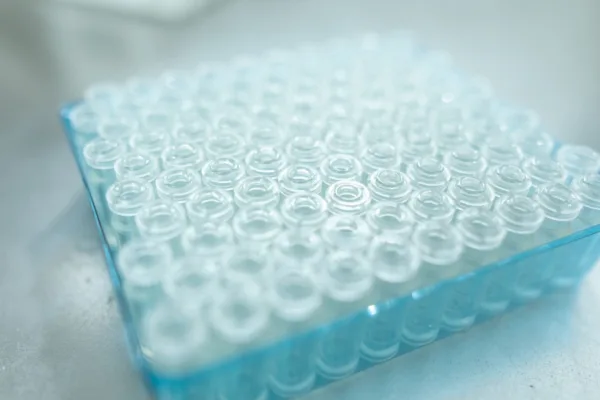
Peptide adsorption to vial walls: the invisible loss that affects your measurements
A researcher who carefully reconstitutes, dilutes and pipettes a peptide solution usually assumes that the concentration in the vial matches what was weighed out. Yet analytical research shows that a considerable part...
Read more -

Labelling and documentation of peptides: traceability in the laboratory
A correct label and a complete file look like an administrative side issue, but in a research environment they are just as decisive for the quality of results as the purity of...
Read more