
Learning about peptides
-
Degradation routes of research peptides: oxidation, deamidation and hydrolysis explained
Why peptides are chemically unstable Research peptides are fragile molecules. A chain of amino acids synthesised, stored and reconstituted in the laboratory undergoes at every step a series of chemical reactions that...
Read more -
TFA salt versus acetate salt in research peptides: why the counterion counts
Anyone placing a lyophilisate of a research peptide on the balance is not weighing the peptide alone. Every synthesised peptide is supplied as a salt: the peptide backbone is bound to a...
Read more -

Regulation of research chemicals in the EU: what a laboratory needs to know
Anyone working with research chemicals in a European laboratory inevitably encounters a regulatory framework reaching beyond the laboratory itself. Registration, classification, labelling and documentation are not a bureaucratic side issue, but partly...
Read more -
GLP-1 receptor agonists in preclinical research: a literature overview
GLP-1 receptor agonists are among the most researched peptide classes of recent years. What began as research into glucose regulation has since spread into cardiovascular physiology, neurobiology and oncology. For laboratories working...
Read more -

Batch-specific CoAs: why the lot number on your certificate counts
A Certificate of Analysis (CoA) is often seen as the proof that a peptide is what the supplier claims. But not every CoA actually belongs to the vial standing on your bench....
Read more -
Molecular weight and net peptide content: from milligram to mole
Anyone working with research peptides in the laboratory sooner or later reaches the same arithmetic step: how many moles of peptide are actually in a given quantity of milligrams of powder? That...
Read more -
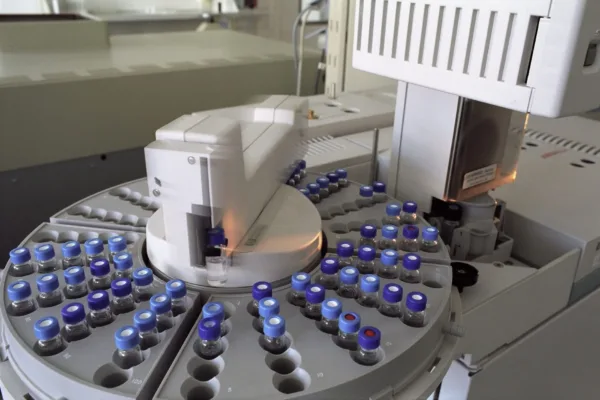
Endotoxins and sterility in research peptides
Endotoxins are one of the most underestimated variables in peptide research. They are invisible, survive most sterilisation methods and can thoroughly disturb the results of cell culture or animal research without the...
Read more -
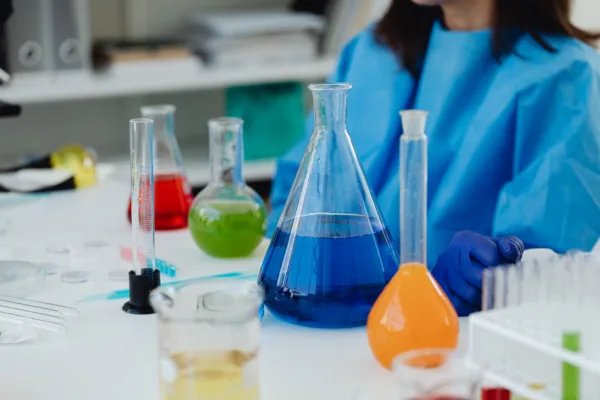
Solubility of peptides: hydrophobic sequences and the choice of solvent
Not every research peptide dissolves equally easily. Where some sequences dissolve clear within seconds in water, others stay stubbornly cloudy, clump together, or even precipitate onto the wall of the tube. For...
Read more -
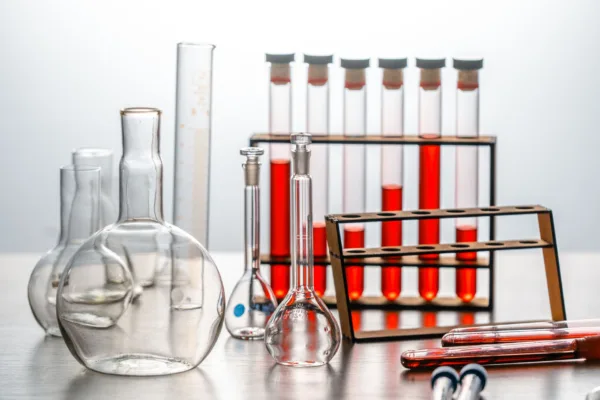
Bacteriostatic water versus sterile water: differences and laboratory use
Anyone working with lyophilised peptides in a laboratory sooner or later faces the same choice: which solvent do you use to reconstitute the powder? The two most widely used options are bacteriostatic...
Read more -
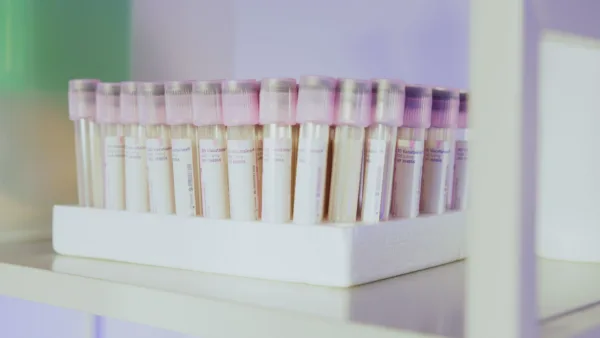
Aliquoting peptide solutions: avoiding freeze-thaw cycles
Anyone working with peptide solutions in the laboratory recognises the problem: a reconstituted stock is prepared, part of it is used for an experiment, and the rest goes back into the freezer....
Read more -
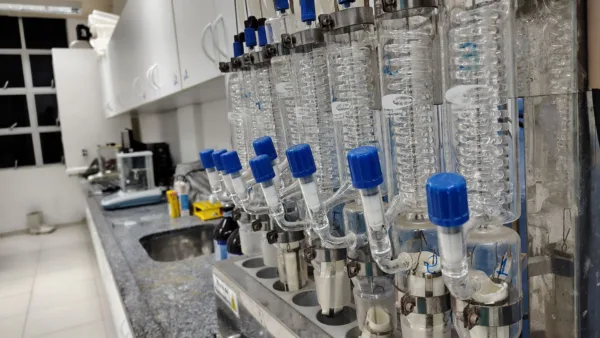
Purity above 98%: what that figure does and does not say
Almost every certificate of analysis (CoA) for a research peptide carries a purity percentage: 98%, 99%, sometimes higher. That number is often read as a simple quality label — the higher the...
Read more -
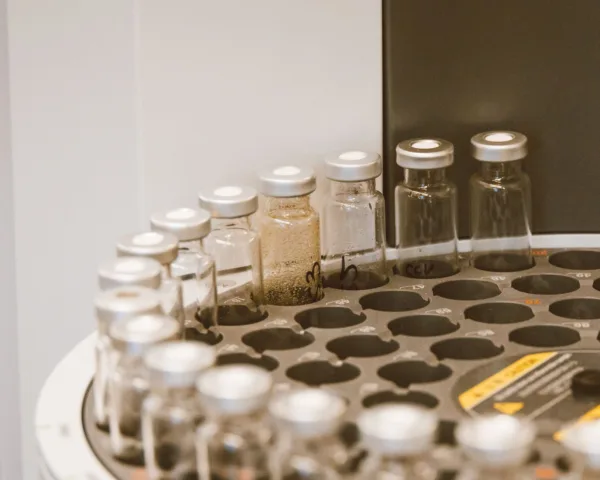
Lyophilisation of peptides: why freeze-drying is the standard
Anyone ordering research peptides almost always receives a white, airy powder in a vial — not a liquid, not an oil, but a granular or sometimes glassy "cake". That is the result...
Read more