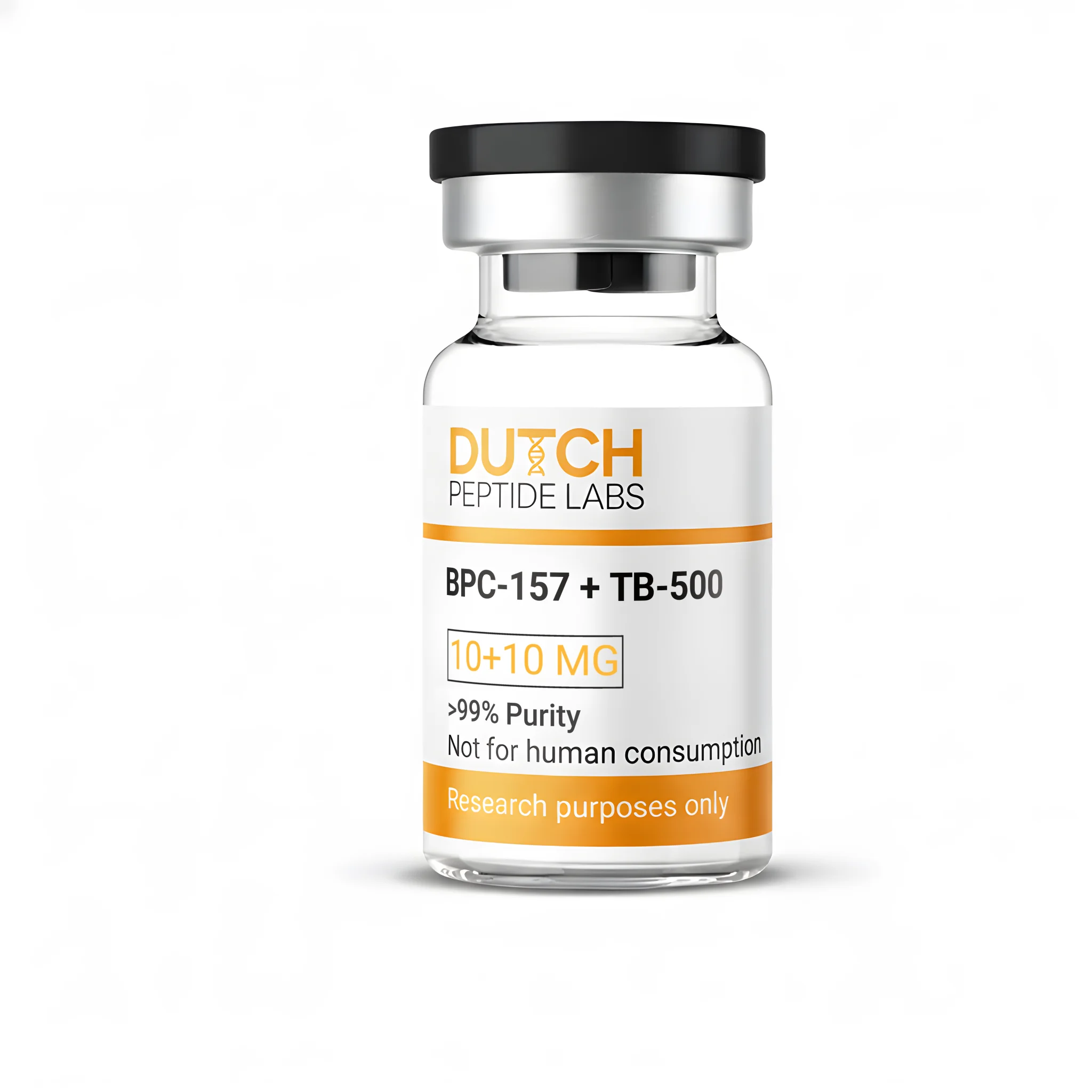
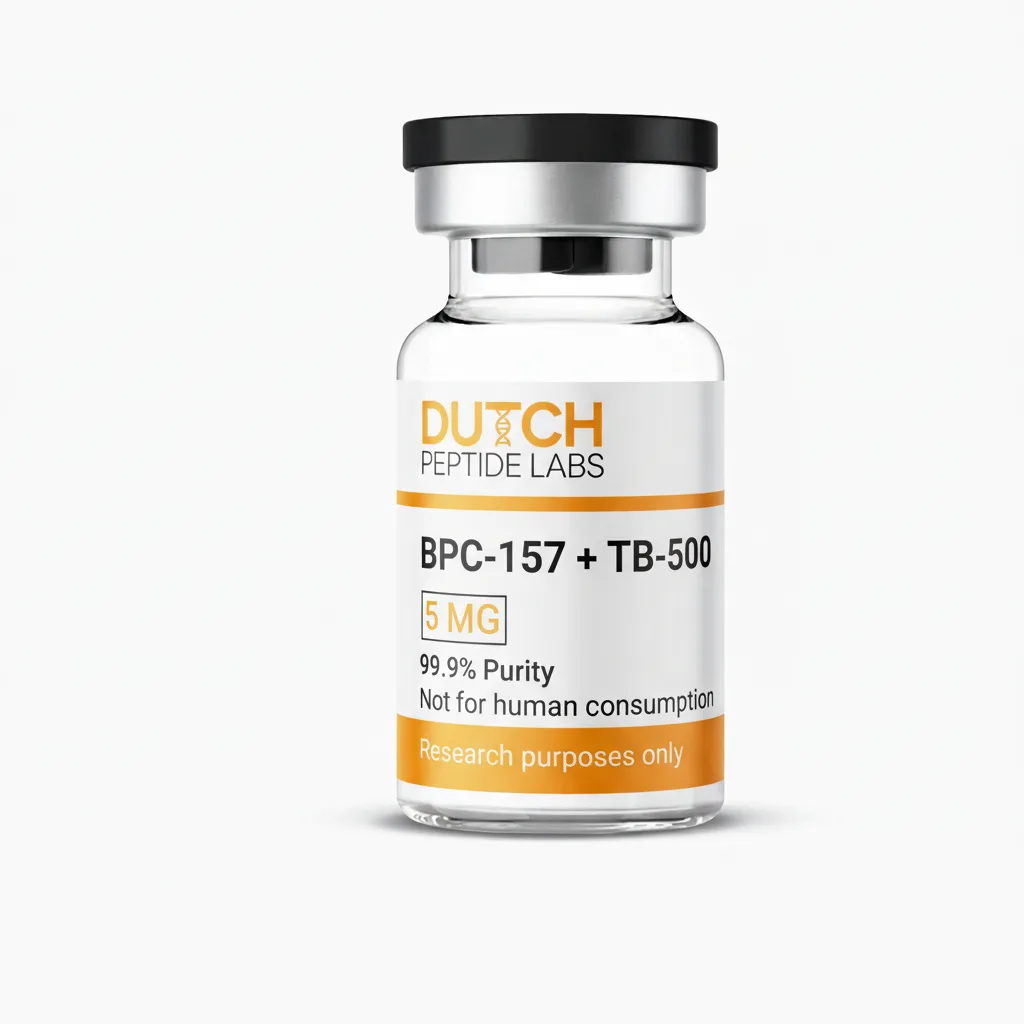
What is BPC-157 + TB-500 Blend?
BPC-157 is a pentadecapeptide (15 amino acids) derived from a sequence in human gastric juice, discovered by researchers at the University of Zagreb. The full sequence is Gly-Glu-Pro-Pro-Pro-Gly-Lys-Pro-Ala-Asp-Asp-Ala-Gly-Leu-Val. TB-500 is a synthetic version of Thymosin Beta-4, a naturally occurring 43-amino acid peptide originally isolated from the thymus.
Analysis and identity
Every batch is tested independently by an external laboratory. The certificate of analysis for this product is available on this page and states the method used, the purity determined and the date of analysis.
Available variants
BPC-157 + TB-500 Blend is available in 5+5mg and 10+10mg. The current price for each is shown with the product options on this page.
Storage and Handling
For optimal stability, the lyophilized powder should be stored at -20°C to -80°C, where it remains stable for at least 2 years. Upon reconstitution with bacteriostatic water or sterile PBS, the solution is stable for 30 days at 2-8°C. For long-term storage of reconstituted solutions, aliquoting and storage at -20°C is recommended. Avoid repeated freezing and thawing. Reconstitution should be done slowly along the side of the vial to prevent foaming. Use sterile techniques and a laminar flow hood if available for optimal product integrity.
Research disclaimer
BPC-157 + TB-500 Blend supplied by Dutch Peptide Labs is intended solely for in vitro laboratory research and scientific purposes. This product is not intended for human or animal consumption, medicinal use, dietary application or therapeutic injection, and has not been approved by regulatory agencies such as the EMA or the FDA. Dutch Peptide Labs makes no claims as to effect, suitability or safety for any application in humans or animals. All use must take place under the supervision of qualified researchers. The seller accepts no liability for unauthorised or unlawful use of this product.