What is GHK-Cu?
GHK-Cu is a bioactive copper complex peptide consisting of three amino acids (glycine, histidine, and lysine) bound to a Cu²⁺ ion. This tripeptide-copper complex is classified as a cosmetic peptide and is recognized for its potential regenerative properties. GHK-Cu was first identified in human plasma by Dr. Loren Pickart in the 1970s, where it was found in higher concentrations in younger blood. Its molecular formula is C₁₄H₂₃CuN₅O₅, with a molecular weight of approximately 404 g/mol. The structure consists of a linear tripeptide backbone with a coordinated copper atom essential for the molecule's biological activity.
Mechanism of Action
GHK-Cu exerts its effects by interacting with multiple biological pathways at the cellular level. The peptide functions as a ligand for specific surface receptors, notably as an agonist for the PAR1 receptor (Protease-Activated Receptor 1) and other G-protein coupled receptors on fibroblast cells and keratinocytes.
The copper atom plays a crucial role in the mechanism of action by serving as a cofactor for various enzymatic processes. GHK-Cu stimulates the activity of lysyl oxidase, an essential enzyme for collagen and elastin crosslinking, leading to improved structural integrity of extracellular matrix components. Additionally, GHK-Cu promotes the expression of transforming growth factor-beta (TGF-β) and other cytokines involved in tissue repair.
At the molecular level, the peptide activates the MAPK/ERK signaling pathway, resulting in increased fibroblast proliferation and enhanced collagen anabolism. GHK-Cu also modulates inflammatory cytokines and promotes a more anti-inflammatory microenvironment, which is conducive to cellular homeostasis.
Research Results
Numerous scientific studies have demonstrated the effects of GHK-Cu in both in vitro and in vivo models. In a prominent study by Pickart et al., GHK-Cu was shown to increase collagen I, III, and IV production by 40-70% within 48 hours of exposure in human fibroblast cultures.
A study published in the Journal of Peptide Research (2015) showed that GHK-Cu significantly stimulated glycosaminoglycan (GAG) production in dermal fibroblast cells, with increases of up to 300% in specific GAG subtypes. GAGs are critical components of the dermal matrix and contribute to moisture retention and elasticity.
In mouse models for wound healing, GHK-Cu accelerated epithelialization and collagen anabolism, resulting in approximately 25-35% faster wound closure compared to control groups. Histological analysis showed improved neocollagen deposition and reduced scar anabolism.
Research on systemic effects has shown that GHK-Cu increases the expression of anti-fibrotic factors and reduces the transformation of fibroblasts into myofibroblasts, which is relevant for wound healing processes. In vitro studies with human keratinocytes also demonstrated increased migration and proliferation, crucial parameters for re-epithelialization.
Available Variants and Purity
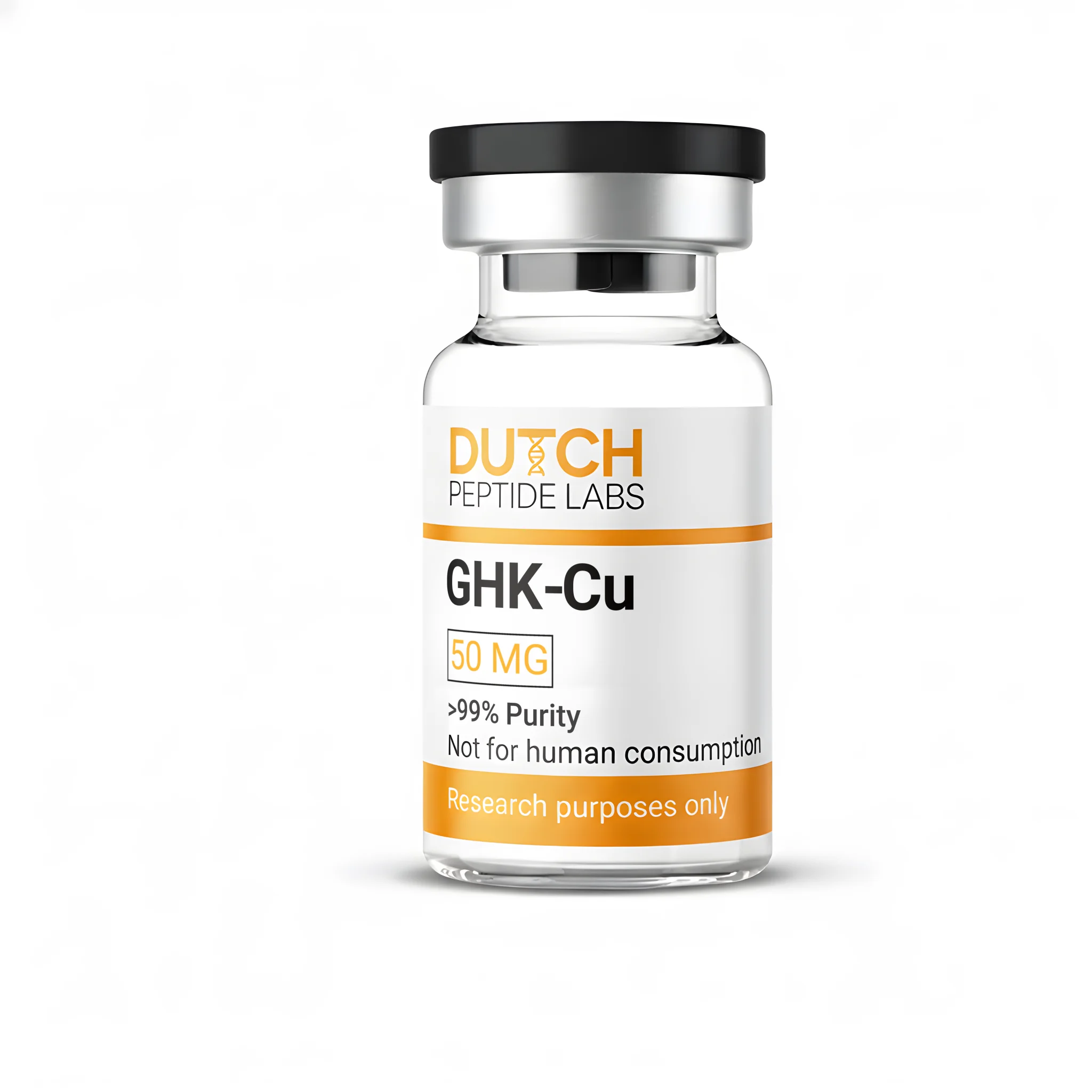
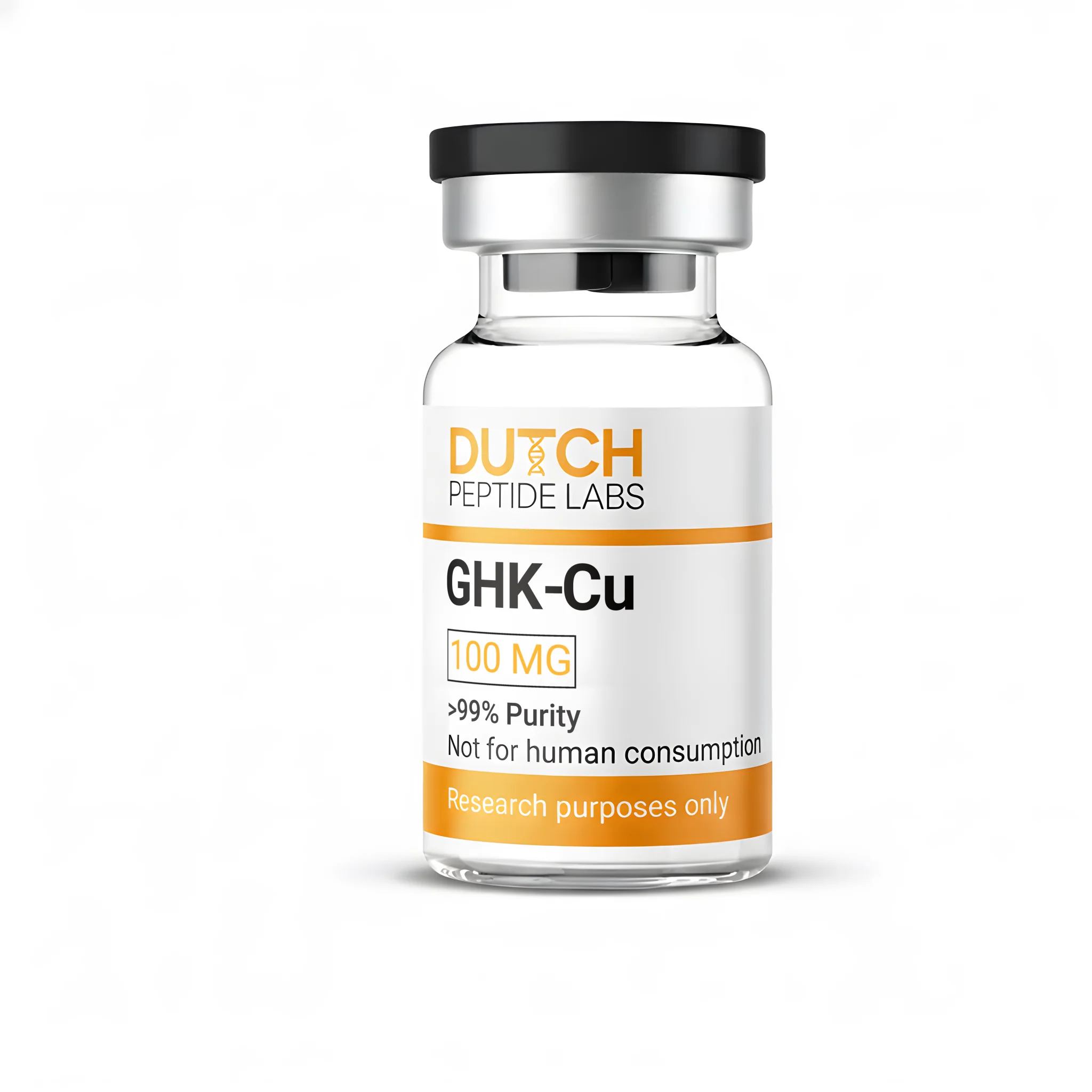
GHK-Cu is available in two dosage packages from Dutch Peptide Labs:
- 50mg variant — €39
- 100mg variant — €59
All GHK-Cu products from Dutch Peptide Labs are guaranteed with a purity of ≥99.9% as determined by HPLC analysis. Each product undergoes independent third-party testing by accredited European laboratories to verify purity, identity, and strength. Test certificates are available upon request and document exact purity values, potential degradation products, and microbiological parameters.
Storage and Handling
GHK-Cu powder should be stored at 2-8°C (refrigeration) in a dry environment, protected from light and moisture. Unopened original packaging can remain stable for up to 24 months under these conditions. After opening, the product should be stored in sealed containers under the same conditions and preferably under an inert gas atmosphere (nitrogen).
For reconstitution, sterile water or 0.9% sodium chloride is recommended. The peptide is highly soluble in water and mild acidic solutions. Reconstituted solutions should be stored at 2-8°C and used within 2 weeks to minimize degradation. It is advisable not to repeatedly freeze and thaw suspended solutions.
Research Disclaimer
GHK-Cu supplied by Dutch Peptide Labs is intended solely for in vitro laboratory research and scientific purposes. This product is NOT approved for human consumption, medicinal use, dietary application, or therapeutic injection. This product has not been approved by regulatory agencies such as the EMA or FDA for medical purposes. All research use must take place under strict laboratory procedures and under the supervision of qualified researchers. The seller accepts no liability for unauthorized or illegal application of this product.