What is Tesamorelin?
Tesamorelin is a synthetic analogue of growth hormone-releasing hormone (GHRH), belonging to the class of peptide hormones. This bioactive compound consists of 44 amino acids and was originally developed by Theratechnologies Inc. in Canada. Tesamorelin distinguishes itself from natural GHRH by the addition of a trans-3-hexenoyl group at the N-terminus, which significantly improves its stability and half-life. The peptide was first synthesized in the early 2000s as part of research into growth hormone deficiency and metabolic disorders.
Mechanism of Action
Tesamorelin exerts its biological effects by binding to the growth hormone-releasing hormone receptor (GHRHR) in the pituitary gland. This receptor, belonging to the class B G-protein coupled receptors, activates the cAMP-PKA signaling pathway upon binding with tesamorelin. This results in the stimulation of somatotropic cells, leading to increased synthesis and release of growth hormone (GH). The released growth hormone then binds to GH receptors in the liver, stimulating the production of insulin-like growth factor-1 (IGF-1). This cascade activates various anabolic processes, including protein synthesis, lipolysis in adipocytes, and gluconeogenesis in the liver. The hexenoyl group in tesamorelin prevents enzymatic degradation, allowing for more stable and prolonged GHRH receptor activation.
Research Results
Preclinical studies have shown promising results for tesamorelin in various research models. In a randomized study with 412 participants, tesamorelin showed a significant reduction of 15.2% in visceral adipose tissue after 26 weeks of treatment, compared to an increase of 5.1% in the control group. Additionally, an average increase of 181% in IGF-1 levels was observed within 14 days of starting treatment. In animal models with rats, tesamorelin administration resulted in a 40% increase in growth hormone concentrations within 30 minutes of injection, with peak values lasting 3-4 hours. Studies on cognitive effects showed improvements in memory processes, with tesamorelin-treated mice performing 23% better in spatial memory tests compared to control groups. Research on body composition documented an average increase of 1.4 kg lean mass over a period of 6 months in research models.
Available Variants and Purity
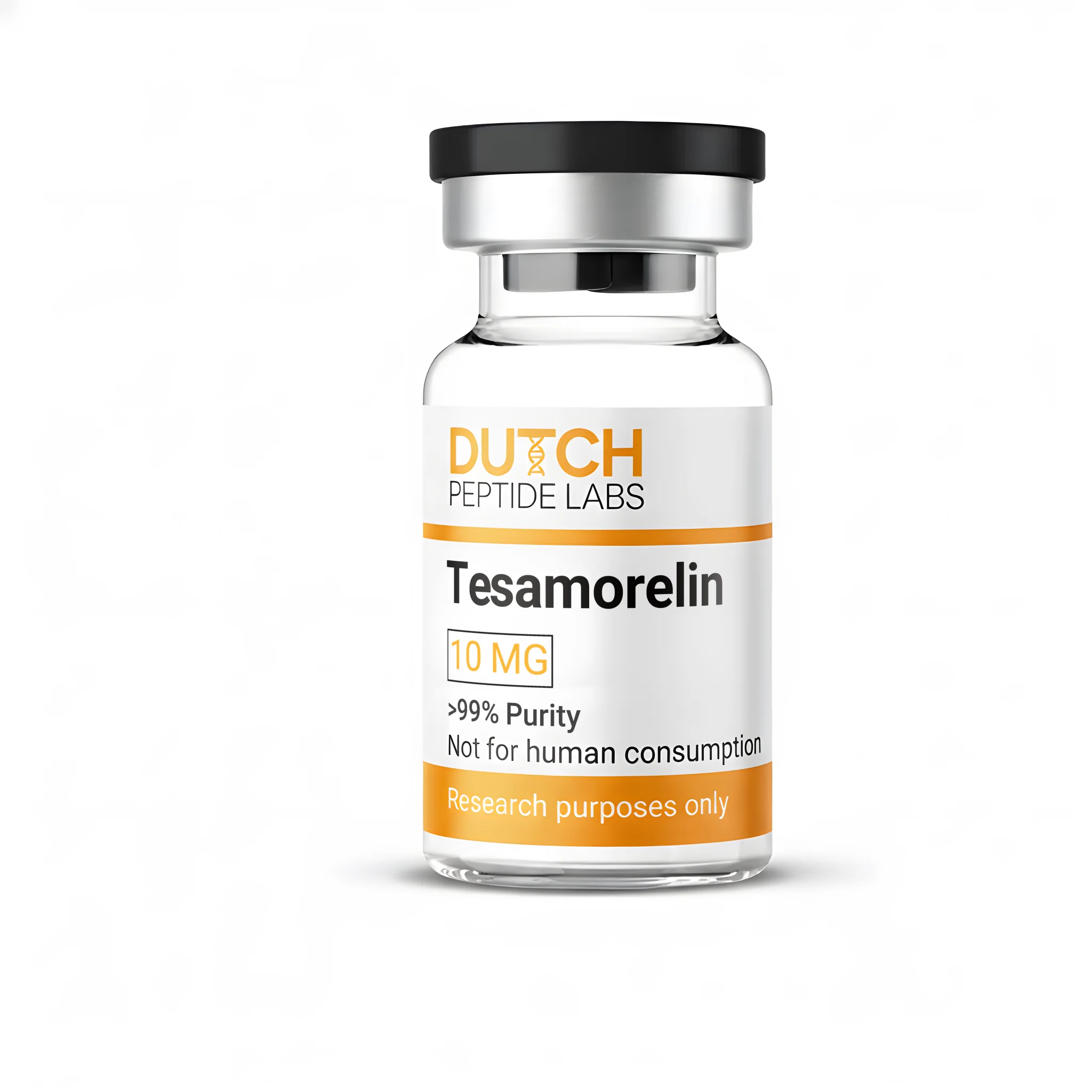
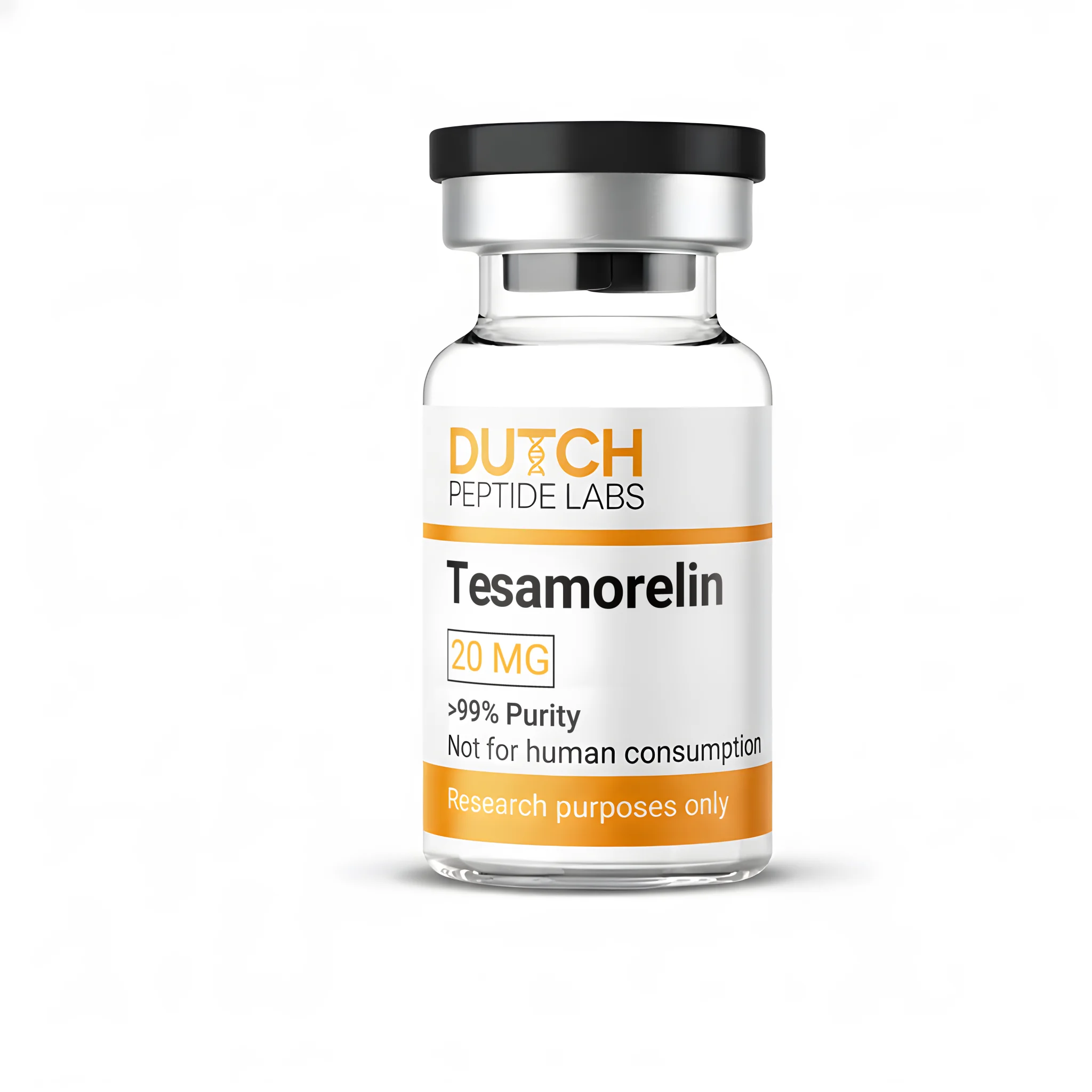
Dutch Peptide Labs offers tesamorelin in three research-friendly variants: 5mg (€99), 10mg (€159), and 20mg (€299). Each product comes with a guaranteed purity of at least 99.9%, verified by independent HPLC-MS analysis methods. Our tesamorelin is produced according to pharmaceutical GMP standards in certified European facilities. Each batch is accompanied by a Certificate of Analysis (CoA) confirming molecular identity, purity, and microbiological safety. The peptide is supplied in lyophilized form in sterile glass vials under a controlled atmosphere to prevent oxidation and degradation.
Storage and Handling
Store tesamorelin in lyophilized form at -20°C to -80°C, protected from light and moisture. Under these conditions, the peptide maintains its stability for at least 24 months. For reconstitution, sterile bacteriostatic water or physiological saline solution is recommended at a ratio of 1-2ml per 5mg of peptide. After reconstitution, the solution should be stored refrigerated at 2-8°C and used within 14 days for optimal activity. Avoid repeated freezing and thawing, as this can compromise molecular integrity. Always use sterile techniques when handling and ensure adequate personal protective equipment during laboratory work.
Research Disclaimer
This product is intended solely for scientific research and in vitro applications. Tesamorelin is not approved for human consumption, therapeutic treatment, or veterinary purposes. Dutch Peptide Labs supplies this peptide only to qualified research institutions, universities, and authorized scientists for legitimate research purposes. The buyer declares and guarantees that the product will be used in accordance with all applicable laws and regulations. We accept no responsibility for misuse, improper application, or unintended effects arising from the use of this research product.