What is Retatrutide?
Retatrutide is an advanced synthetic peptide belonging to the class of glucose-dependent insulinotropic polypeptide (GIP), glucagon-like peptide-1 (GLP-1), and glucagon receptor tri-agonist. This innovative compound was developed by Eli Lilly and Company and represents a new generation of multi-receptor agonists. Molecularly, retatrutide consists of a modified peptide structure with a molecular weight of approximately 4,600 Da. The peptide contains strategic amino acid modifications and a lipophilic side chain that ensure extended half-life and improved stability. The unique triple receptor activity distinguishes retatrutide from traditional GLP-1 monoagonists by simultaneously activating multiple metabolic pathways.
Mechanism of Action
Retatrutide acts as a potent tri-agonist that simultaneously activates the GIP, GLP-1, and glucagon receptors. By binding to the GLP-1 receptor, it stimulates glucose-dependent insulin secretion and inhibits glucagon release from pancreatic α-cells. GIP receptor activation enhances insulinotropic effects and modulates fat metabolism through direct effects on adipocytes. Unique to retatrutide is its glucagon receptor agonism, which increases energy expenditure by stimulating hepatic glucose production and lipolysis. This tri-receptor activation results in synergistic effects on glucose homeostasis, energy balance, and body weight regulation. The peptide also slows gastric emptying via vagal mechanisms and influences satiety signals in the central nervous system by activating hypothalamic POMC neurons. The extended half-life of approximately 7 days allows for less frequent dosing in research protocols.
Research Results
Preclinical studies have reported remarkable results for retatrutide. In obese mouse models (DIO models), retatrutide showed superior weight reduction of 35-40% compared to vehicle controls over 4 weeks of treatment. Studies in diabetic db/db mice demonstrated significant HbA1c reductions of 2.1-2.8% and glucose normalization within 2 weeks. Phase II clinical trials (MOMENTUM-1) showed average weight losses of 17.5% at the highest dosage (12mg weekly) over 48 weeks in obese subjects. Cardiovascular parameters consistently improved, with systolic blood pressure reductions of 6-10 mmHg. In vitro studies in 3T3-L1 adipocytes showed increased lipolysis (280% of control) and improved insulin sensitivity. Liver studies in NASH models demonstrated a 45% reduction in hepatic steatosis and improved liver function markers. Particularly interesting are the neuroprotective effects observed in preclinical models, possibly related to GLP-1 receptor expression in brain tissue.
Available Variants and Purity
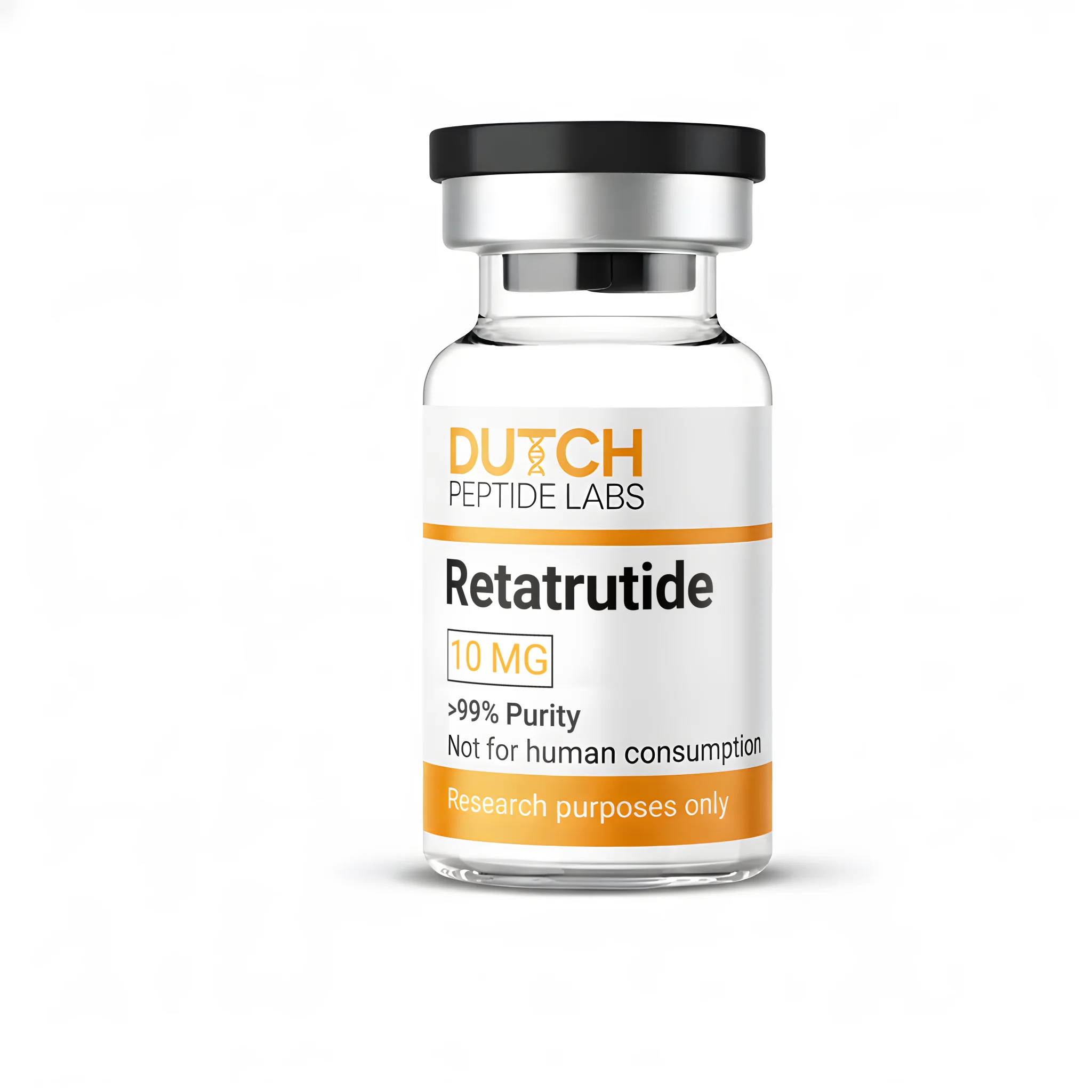
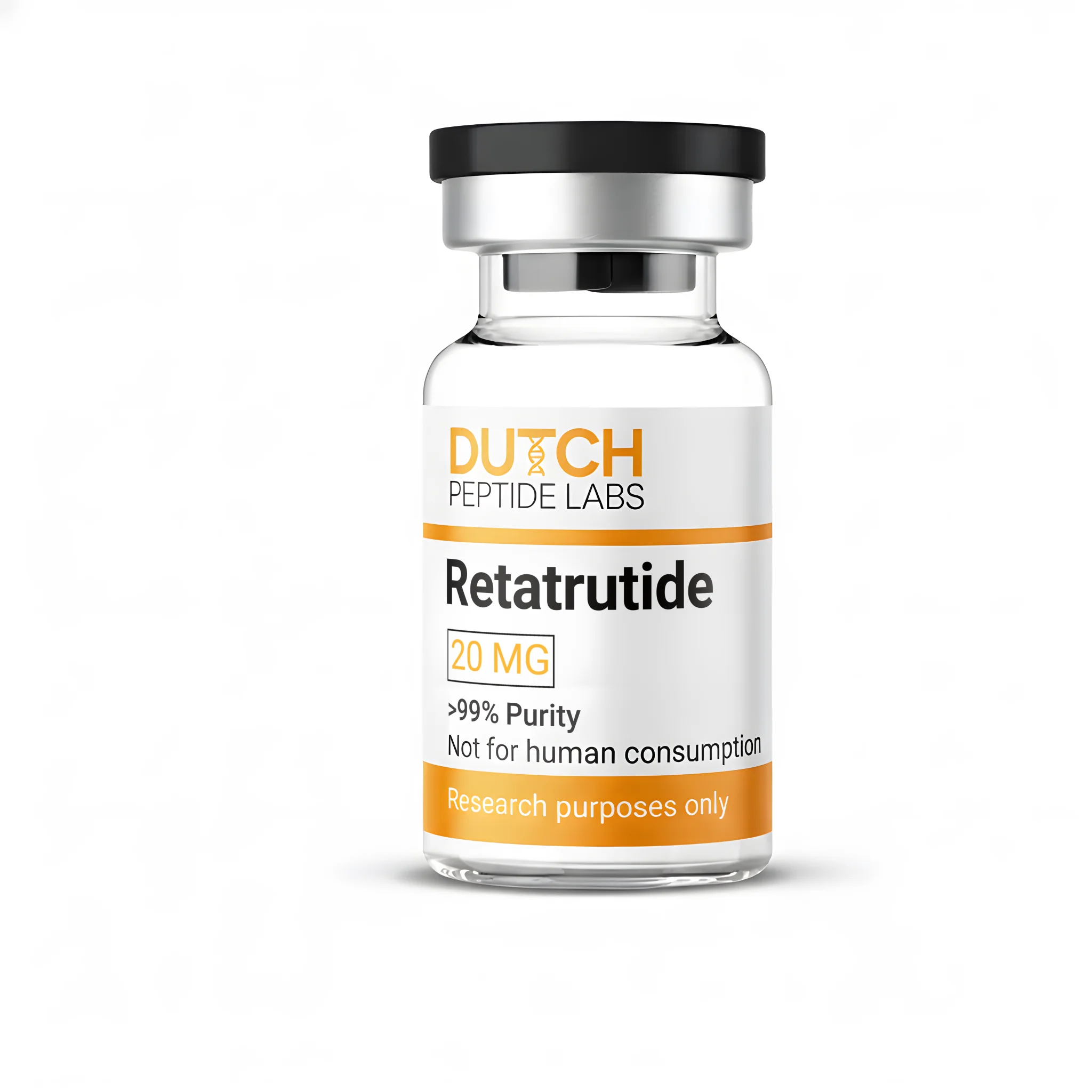
Dutch Peptide Labs offers retatrutide in five research-grade variants: 10mg (€99), 15mg (€135), 20mg (€159), 30mg (€189), and 60mg (€299). Each product is manufactured according to strict pharmaceutical standards with a guaranteed purity of 99.9%, verified by independent HPLC-MS analysis. Every batch undergoes extensive quality control including endotoxin testing, water content analysis, and sterility testing. Certificates of analysis are provided with each delivery, complete with chromatographic data and structural verification. The peptide is supplied as a sterile, white lyophilized powder in pharmaceutical glass vials under an inert atmosphere.
Storage and Handling
Store unreconstituted retatrutide at -20°C in its original packaging, protected from light and moisture. Under these conditions, the peptide remains stable for at least 24 months. For reconstitution, use sterile water for injection or bacteriostatic water, add slowly along the vial wall to prevent foaming. Reconstituted solutions are stable for 30 days at 2-8°C. Avoid repeated freeze-thaw cycles that can cause peptide degradation. Always use sterile techniques when handling and wear appropriate personal protective equipment. Store reconstituted solutions in aliquots to minimize repeated exposure to environmental conditions.
Research Disclaimer
Retatrutide is provided exclusively for scientific research and laboratory use by qualified researchers. This product is not approved for human consumption, therapeutic use, or veterinary applications. Dutch Peptide Labs supplies research-grade materials exclusively to accredited research institutions and laboratories. Users are responsible for complying with local regulations and institutional guidelines. The product must be handled by experienced researchers in suitable laboratory facilities with adequate safety precautions. Always consult relevant safety data sheets and institutional protocols prior to use.