What is Semaglutide?
Semaglutide is a synthetic peptide supplied by Dutch Peptide Labs strictly as research material. It is classified as a GLP-1 agonist and is supplied as a lyophilised powder.
Molecular properties
The molecular formula is C₁₈₇H₂₉₁N₄₅O₅₉. The molecular weight is approximately 4,114 g/mol. These values come from PubChem (CID 56843331) and the certificate of analysis for batch SEM 15-260801A; they were not determined by Dutch Peptide Labs.
We list
no CAS number for Semaglutide. Our two sources give different numbers — the certificate of analysis states 1997361-85-9, PubChem 910463-68-2 — and until that is resolved we publish neither.
The amino-acid sequence is deliberately not listed. We publish only data we can point at a source for, and for this sequence that source is missing.
Analysis and identity
Every batch is tested independently by Kovera Labs. The certificate of analysis for this product covers batch
SEM 15-260801A (20 mg), certified on 6 July 2026 under report number KVR-2026-CE7858, with a measured average purity of 99.642% across two vials (RP-HPLC, C18, detection at 214 nm). The full certificate is available on the product page.
That figure is for that batch. Other batches are tested the same way and carry their own certificate.
Available variants
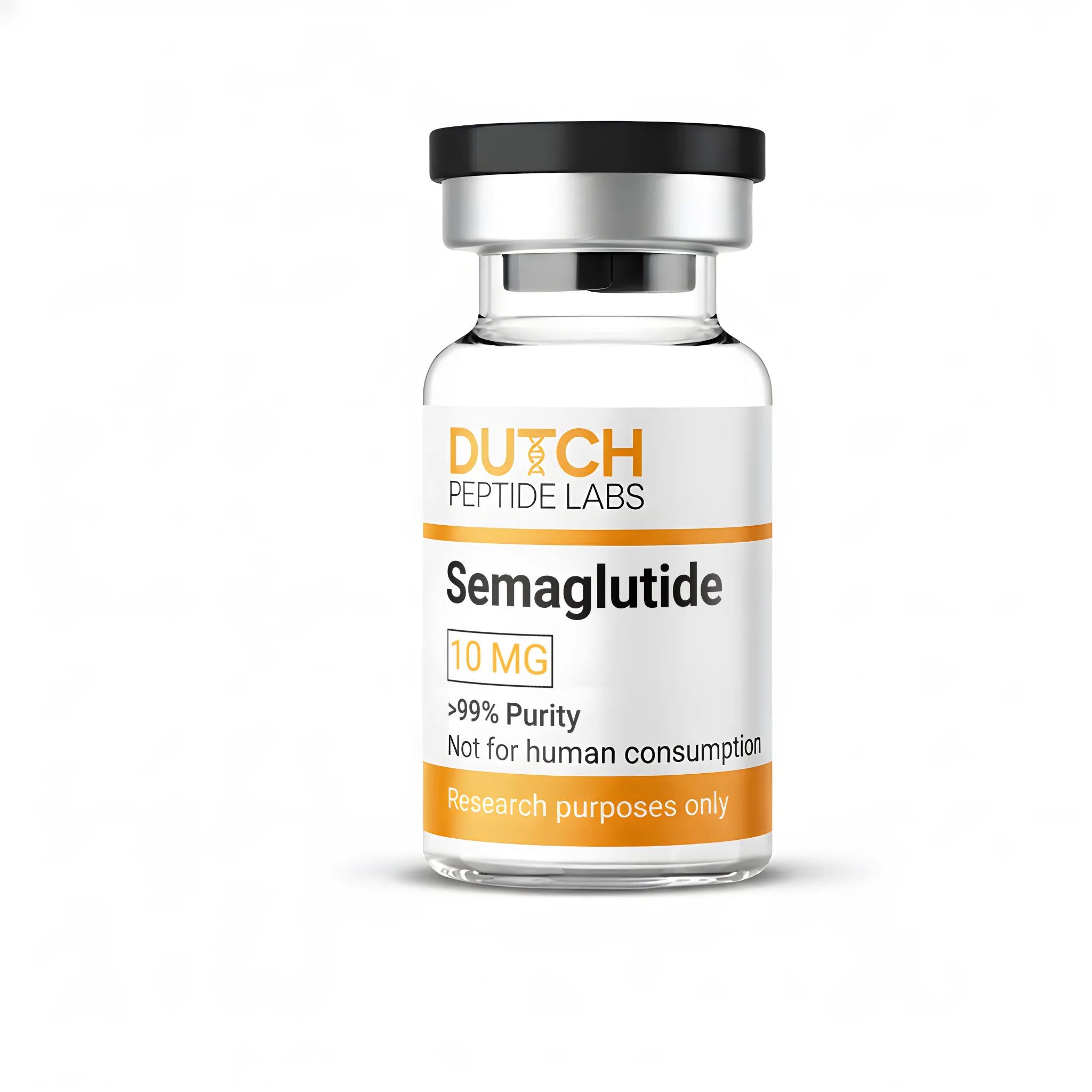
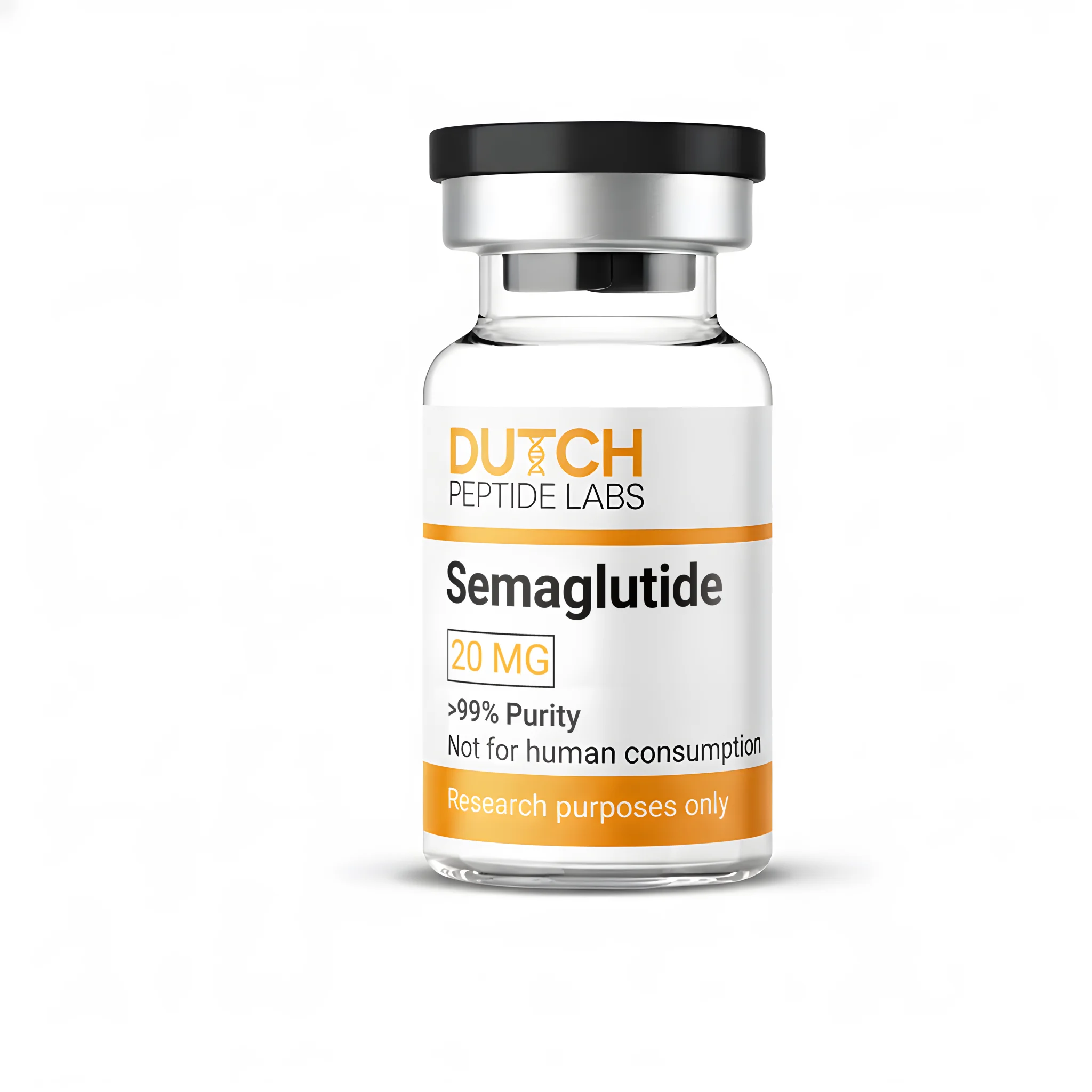
Semaglutide is available in two variants:
Both are supplied as a lyophilised powder in a sealed vial.
Storage and handling
Store at -20 °C, dry and protected from light. After reconstitution, store at 2–8 °C and use within 2–4 weeks. Repeated freezing and thawing is not advised. Handle according to your laboratory's own procedures for research materials.
Research disclaimer
Semaglutide supplied by Dutch Peptide Labs is intended solely for in vitro laboratory research and scientific purposes. This product is
not intended for human or animal consumption, medicinal use, dietary application or therapeutic injection, and has not been approved by regulatory agencies such as the EMA or the FDA. Dutch Peptide Labs makes no claims as to effect, suitability or safety for any application in humans or animals. All use must take place under the supervision of qualified researchers. The seller accepts no liability for unauthorised or unlawful use of this product.